
How to assess a pokies parlour claim
The phrase can describe a gaming area or a gambling service, but it does not establish a venue’s licence or an online service’s connection to a casino.

Table of Contents
Table of Contents
- What “Pokies Parlour” Means in an Australian Casino Context
- Casino Locations and the Shape of the Australian Market
- Venue Details: Addresses and Operating Hours
- Parlour Pokies and the Casino Machine Count
- Online Play, Site Access and Australian Regulation
- No-Deposit Sign-Up Bonuses: What the Search Term Can—and Cannot—Confirm
- Free Chips and Spins: Verify the Claim, Not the Label
- Reviewing a Pokies Parlour Claim Against Verifiable Details
- Pokies Parlour Bonuses: Terms Are Not Proof of Legitimacy
- Real-Money Play and the Limits of an Online Claim
What “Pokies Parlour” Means in an Australian Casino Context
“Pokies parlour” is an informal phrase, not a single legal or regulatory category in Australia. In a casino context, it can describe an area associated with electronic gaming machines, or it can be used loosely in the name or description of a gambling service. Those meanings are not interchangeable. The phrase alone does not identify a particular venue, establish who operates a service or show that an online business is authorised in Australia.
The distinction matters because Australia’s casino industry is regulated by state and territory governments. Each casino property operates under a licence issued by the jurisdiction where it is located. That venue-based arrangement gives “casino” a specific context: a physical property operating under local rules and oversight. The words “pokie parlour” do not, by themselves, establish that a business is one of those licensed properties or that a separate online service has any connection to one.
In ordinary use, “parlour” suggests a dedicated room or area. A person describing a casino’s gaming floor might use the term to distinguish that area from restaurants, bars or other parts of the property. But the phrase is not enough to establish how a particular casino is laid out, what facilities it offers, or whether it uses “parlour” as an official name. Those details need to be checked against information from the venue and its licensing jurisdiction, rather than inferred from wording.
Top operators
Choosing a pokies parlour casino in Australia is easier when the key details are clear. Use this list as a quick reference to the licensing and payment information available for each operator.
-
Uptown Pokies
- License
- Curacao (operating since 2017)
- Min. deposit
- A$20
Uptown Pokies has operated since 2017 and holds a Curacao license. Its minimum deposit is A$20.
-
WinSpirit Casino
- License
- Curacao eGaming OGL/2024/923/0383 (Antillephone N.V.)
- Min. deposit
- A$30
WinSpirit Casino holds Curacao eGaming license OGL/2024/923/0383, issued to Antillephone N.V. The minimum deposit is A$30.
-
Golden Pokies
- License
- Curacao
Golden Pokies is listed with a Curacao license. No other operator details are provided here.
-
SkyCrown
- License
- Tobique Gaming Commission
- Payout speed
- crypto ~10-15 minutes, fiat 1-5 days
- Min. deposit
- A$30
SkyCrown is licensed by the Tobique Gaming Commission. Its stated payout times are around 10–15 minutes for crypto and 1–5 days for fiat; the minimum deposit is A$30.
-
LuckyVibe
- License
- Curacao Gaming Control Board OGL/2023/176/0095 (Hollycorn N.V.)
LuckyVibe holds Curacao Gaming Control Board license OGL/2023/176/0095, issued to Hollycorn N.V. No other operator details are provided here.
-
MrPacho
- Payout speed
- crypto 30-120 minutes, fiat 24-72 hours
- Min. deposit
- A$30
MrPacho’s stated payout times are 30–120 minutes for crypto and 24–72 hours for fiat. Its minimum deposit is A$30.
-
7Bit Casino
- License
- Curacao, operated by Dama N.V.
7Bit Casino is licensed in Curacao and operated by Dama N.V. No other operator details are provided here.
-
Thor Casino
- License
- Curacao – Antillephone N.V. (Versus Odds B.V.)
- Min. deposit
- EUR 20
Thor Casino is licensed in Curacao by Antillephone N.V. (Versus Odds B.V.). Its minimum deposit is EUR 20.
-
GoldenCrown
- License
- Curacao Gaming Control Board OGL/2023/176/0095 (Hollycorn N.V.)
GoldenCrown holds Curacao Gaming Control Board license OGL/2023/176/0095, issued to Hollycorn N.V. No other operator details are provided here.
-
Ricky Casino
- Payout speed
- crypto under 1 hour, PayID 1-3 business days
- Min. deposit
- A$20 (A$30 to qualify for the bonus)
Ricky Casino lists crypto payouts in under an hour and PayID payouts in 1–3 business days. The minimum deposit is A$20, or A$30 to qualify for the bonus.
The same caution applies when “pokie parlour” appears as the name of a website or service. A familiar Australian term can be used in branding without proving that the business is an Australian casino, is operated by a licensed venue, or holds a local casino licence. A name is a label, not a regulatory record. The word “casino” in a title does not change that calculation.
Australia has more than one form of gambling venue, and the word “casino” should not be treated as a catch-all for every place where gambling occurs. A casino property sits within the licensing framework of its state or territory; a phrase used for a machine area, an independent venue or an online service may refer to something else. Calling all of these a parlour casino blurs distinctions that matter when identifying the operator and the applicable rules.
Some specialist gambling reviews describe the Australian market as having more than twenty full-scale casinos across all eight states. That is a published market estimate, not a fixed legal definition of what counts as a casino or parlour. The number may depend on how the reviewer classifies properties and when the count was made. It should not be used to infer that every venue described as a parlour is a casino, or that each state has the same type of facility.
Entry to Australian casinos is restricted to adults: the nationwide minimum age is 18. That rule is another part of the venue context, but it does not turn an online service using similar language into a licensed venue. Nor does an age statement on a website prove that the operator is authorised. Identity, venue status and licensing are separate questions; a single label cannot answer all three.


For a specific claim, the useful distinction is between a physical casino property and a phrase used to describe a room, a business or a website. A property’s licence belongs to the relevant state or territory framework. A marketing description may simply borrow familiar wording. Even where a site presents itself as a “pokies parlour casino,” the phrase does not establish that it is connected to a licensed Australian casino. The wording may be clear; the status still requires separate evidence.
This is why “pokies parlour” is best read as descriptive language unless a venue’s own information and jurisdictional records confirm a more precise meaning. It can point toward a machine-gaming area in everyday conversation, but it is not proof of a separate licensing class or an online entitlement. In the Australian casino context, the decisive distinction is not the label on a page; it is whether the reference is to a licensed physical property or merely to a service adopting casino language.
Casino Locations and the Shape of the Australian Market
Australia’s gambling map is distributed across cities and jurisdictions rather than concentrated in a single national centre. One specialist gambling review counts venues in 147 Australian cities. That figure describes the scope of its own directory, not a fixed national register: what it includes as a gambling location depends on its coverage and on how its listings are classified.

The same review identifies Sydney, New South Wales, as the country’s largest gambling city, listing 11 gambling facilities there. The measure is broader than a count of casinos. A facility listing does not, by itself, establish that each entry is a casino or that all entries offer the same forms of gambling. The distinction matters when comparing a city-level directory with the licensed casino market, which is organised through state and territory jurisdictions.
Sydney’s position in that directory is therefore best read as a statement about its listed concentration of gambling facilities, not as a complete measure of Australian casino capacity. A city can host multiple kinds of gambling venue, while casino licences apply to particular properties under local jurisdiction. The city count and the casino count answer different questions; adding them together would not produce a meaningful national total.
The Northern Territory provides a smaller regional example. A specialist review lists three casinos across three cities in the territory. In that same account, Alice Springs has the highest city-level casino count there, at one. This is a narrow comparison within the territory, rather than evidence that Alice Springs contains a large share of Australia’s gambling facilities. The reported figures describe a distribution across cities; they do not establish venue size, machine numbers, operating conditions or the range of facilities at any property.
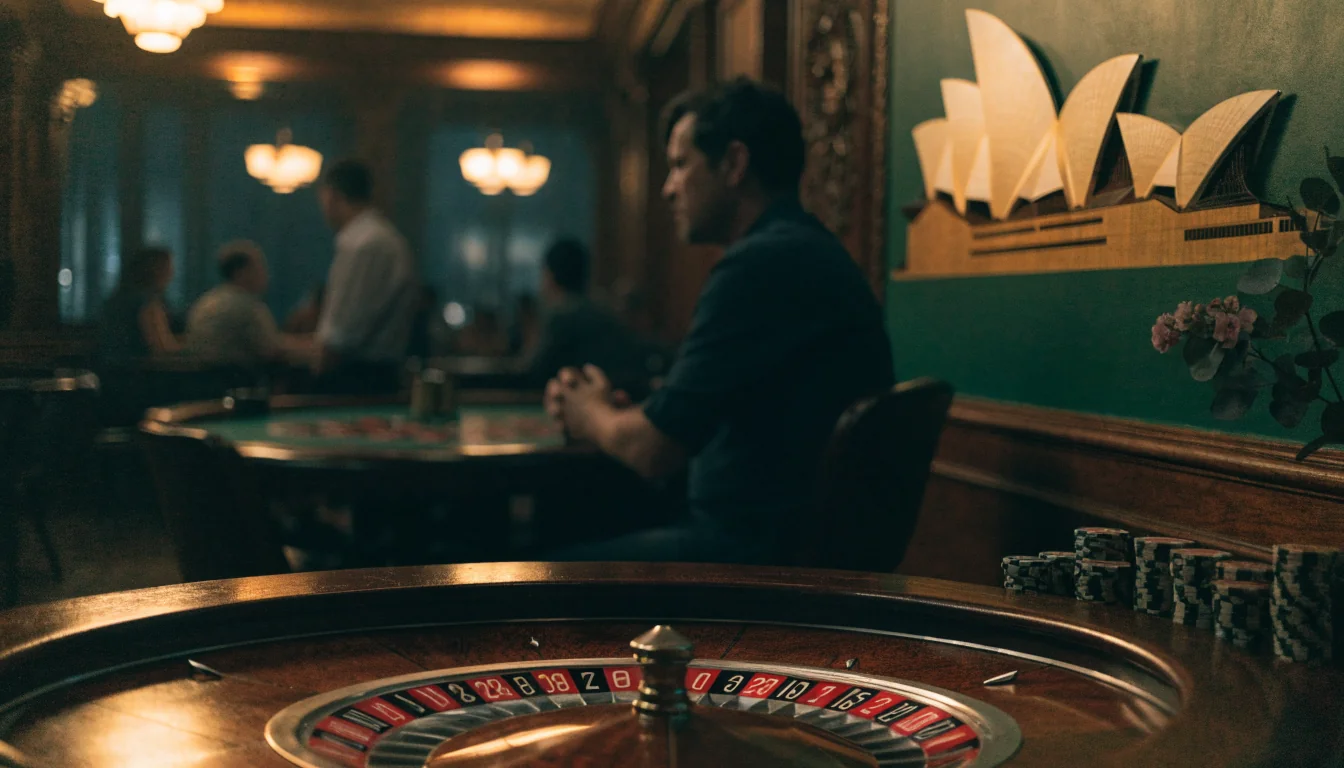

These counts are time-sensitive. Gambling venues can open, close, change status or be categorised differently by listing services, so directory totals should be treated as dated snapshots rather than permanent market boundaries. The review-based figures are useful for orientation: they indicate how one published mapping groups the market, while the underlying licensing framework remains jurisdictional.
For a reader looking for a physical Australian pokies parlour or casino, that difference sets a practical boundary around location claims. A national city count shows how widely gambling facilities are listed; it does not verify a particular venue’s licence or identify its on-site offering. A state or territory’s licensing context is more relevant to the status of an individual casino, while a location listing helps place it geographically. Neither measure substitutes for the other.
The broad pattern is thus one of dispersed gambling locations, with Sydney prominent in a specialist directory’s facility count and the Northern Territory’s casino listings spread across three cities. Those numbers should be read with their source type attached, not presented as an official census. A map can show where a market is reported to exist; it cannot, on its own, settle what a particular venue is authorised to provide.
Sydney, New South Wales
Identified as the country’s largest gambling city in a specialist review, listing 11 gambling facilities.
Northern Territory
A specialist review lists three casinos distributed across three different cities.
Alice Springs
Holds the highest city-level casino count within the Northern Territory, with one venue.
Venue Details: Addresses and Operating Hours
Location details are more useful when they identify a physical venue rather than imply a separate online parlour. Lasseters Casino is at 93 Barrett Drive, Alice Springs, in the Northern Territory, with the postcode 0870. That address identifies the venue; it does not, by itself, describe a particular room, membership category or gaming area.
Operating hours provide a separate point of comparison. All major casinos in Australia run around the clock, so a venue’s access is not limited to a conventional daytime schedule. That general operating-hours fact should not be confused with the hours of every restaurant, entertainment space or restricted area within a property. A venue can remain open while particular facilities follow different arrangements.
The phrase “VIP parlour” can suggest a distinct setting, but the label alone establishes neither a venue address nor the access conditions attached to a space. Venue-level details should be tied to the named property and treated separately from descriptions of a particular service or room. For Lasseters, the verifiable location is the Alice Springs address above; the general 24-hour schedule applies to major Australian casinos as a class.
Parlour Pokies and the Casino Machine Count
The national figure gives a useful scale for understanding gaming machines in Australian casinos, but it does not describe a particular parlour or venue. Across the country, 3,308 machines are both endorsed under venue licences and installed in casinos. The count is an aggregate: it does not identify individual machines, show how they are arranged, or establish which offerings are available at any one location.


That distinction matters when the term “parlour pokies” is used to describe a specific place or selection. A national total cannot substantiate a claim that a venue has a dedicated parlour, nor can it confirm the contents of one. Those details require venue-specific evidence; the nationwide number answers a narrower question about the licensed and installed casino-machine total.
Country Club Casino, for instance, is associated with Country Club Avenue in Prospect, within Meander Valley. That address helps identify a named venue, but it does not disclose a machine count for that property or define a separate parlour offering. Location and equipment totals are different records, and one cannot be calculated from the other.
The figure is therefore most useful as a boundary on what can be stated: Australia has a documented casino machine total, while the total alone says nothing about a particular venue’s layout or inventory. Treating it as a count of parlour machines would assign a level of detail the number does not contain. The accounting is plain: a national aggregate remains an aggregate, however often a more specific label is attached to it.
Online Play, Site Access and Australian Regulation
A page described as an online pokies parlour may look like a casino service, but its label does not determine its legal status. Nor does a site become Australian-licensed because it loads, accepts account traffic or appears under a different web address. These are observations about access and presentation, not evidence of authorisation.
The distinction matters because the Interactive Gambling Act 2001 prohibits operators from providing real-money online casino games to people in Australia. That includes online slots, poker and table games such as blackjack and roulette. A service presented as a casino does not fall outside that rule because it uses a new domain, changes its branding or describes play in different terms.
Australian internet access can also change when authorities take enforcement action. Website blocking may affect which domains resolve through Australian internet service providers, while alternate addresses can appear over time. A domain change may explain why a page appears under a different address; it does not alter the underlying legal position. Likewise, a successful page load cannot establish that the service is permitted to provide online casino games in Australia.
The Australian Communications and Media Authority (ACMA) is the federal body responsible for enforcing the Interactive Gambling Act 2001 and monitoring compliance with federal interactive gambling laws. Where a website provides prohibited interactive gambling services or advertises them in Australia, ACMA can ask internet service providers to block access. Blocking is an enforcement measure directed at access to the site; it is not a licensing process and does not convert a prohibited service into an authorised one.
The scale of that work is measurable. Following enforcement actions, ACMA has blocked more than 1,455 illegal gambling and affiliate websites since November 2019. Blocking can involve a service’s web addresses, which helps explain why an address may stop working while another appears. The number describes websites blocked, not a count of licensed casinos, physical venues or individual games.
Withdrawal totals since ACMA began enforcement in 2017 are stated inconsistently: one account puts the number of illegal services that left the Australian market above 210, while another puts it above 190. Those figures should not be merged into a single precise total. They refer to services withdrawing from the market, a different measure from websites blocked, and the difference is material when the figures are used to describe enforcement outcomes.


For searches about online casino play, the useful distinction is therefore between a site’s claims and the legal status of the service. A page can call itself a parlour, offer account access or display an alternative address without establishing that its real-money casino games may lawfully be supplied to people in Australia. Free-play wording also does not, by itself, establish the status of any real-money service associated with the same site. Each claim concerns what the page says or permits technically; neither substitutes for the governing law.
ACMA’s blocking actions and the law address the provider and the service. The legal prohibition concerns operators supplying online casino-style gambling to customers in Australia; it does not make a website’s availability proof of compliance. For Australian online casino claims, the address is only an address, and access is only access.
No-Deposit Sign-Up Bonuses: What the Search Term Can—and Cannot—Confirm
A no-deposit sign-up bonus is a promotional claim, not a settled description of what an account will receive. The wording may imply that registration alone triggers a benefit, but it does not establish the amount, whether the offer is available, what conditions apply, or whether the service named in the promotion is the service operating the site. Without those details, the label has little value for assessing a real offer.
The distinction matters in Australia because the Interactive Gambling Act 2001 prohibits operators from providing real-money online casino games to people in the country. A bonus described as attached to online slots, poker or table games does not alter that legal position. Nor does calling a site a pokies parlour or presenting a sign-up benefit as a welcome offer make prohibited online casino gambling lawful.
What the wording leaves unresolved
A headline can omit the conditions that determine whether a promotional balance has practical value. The full terms may describe eligibility, permitted use, withdrawal restrictions and circumstances in which an offer can be removed. Those details must be read together: a benefit that cannot be used or withdrawn as the headline suggests is not equivalent to cash.
No figures should be inferred from the phrase “no deposit.” It does not, by itself, state a bonus amount, a required wagering total, a time limit or a final withdrawable sum. If those terms are not clearly presented, the financial outcome cannot be calculated. The correct figure is not an estimate; it is unknown.
The same distinction applies to a sign-up bonus. Registration may be described as the trigger, while other conditions determine whether the promotion is credited or usable. A page that gives only a headline has not supplied enough information to assess the offer. Fine print is not a minor adjustment to the claim; it can define the claim.


A domain change does not settle identity
Promotional pages and account pages may appear under different web addresses. A specialist review notes that Australian website blocking can affect which domains resolve through local internet service providers, while alternate addresses may appear over time. That changes the address visible to a user; it does not, on its own, prove that the operator, account system or bonus terms are unchanged.
An enforcement summary records ACMA blocking action involving illegal gambling services, including alternate domains associated with Fair Go. The relevant point for a bonus claim is narrow: a new address or a page that loads cannot establish that the service is legally entitled to offer online casino play in Australia. Access and regulatory status are separate questions.
Where the domain changes, a bonus page should not be treated as self-authenticating. The name, terms and destination address need to be considered together, and a difference between them leaves the connection unconfirmed. A familiar brand label is not a substitute for identifying the service behind the page. Equally, a matching logo or copied terms do not establish that the page belongs to the same operator.
Reading the claim as a calculation
A useful assessment separates the promotion into its components: what is being offered, what action supposedly qualifies, what restrictions govern use, and what outcome is available. If any component is absent, the claim remains incomplete. If the terms describe a balance that cannot be withdrawn until conditions are met, the headline amount is not the final amount.
That calculation still cannot convert an unlawful service into a lawful one. In Australia, real-money online casino games are prohibited for operators to provide to people physically located in the country. A promotional label, alternate domain or account invitation does not create an Australian online casino licence or change the statutory restriction.

The practical conclusion is limited but clear: “no deposit” describes marketing language, not verified value. The wording alone confirms neither an actual entitlement nor the identity or legal status of the service using it. For an online casino promotion directed at Australians, the decisive issue is not how the bonus is packaged; the underlying offer remains subject to the prohibition on providing real-money online casino games.
Free Chips and Spins: Verify the Claim, Not the Label
“Free chips” and “free spins” are promotional labels, not evidence that an offer is available to someone in Australia or that the service behind it is authorised to provide online casino gambling. The word “free” describes the pitch. It does not establish what the offer does, what conditions apply, or whether the underlying service can lawfully be provided in Australia.
A label alone cannot show whether a claimed benefit is credited automatically, restricted to particular accounts, or subject to conditions before it can be used or withdrawn. Those details would have to appear in the offer terms. Even complete terms answer only questions about the promotion as presented; they do not verify the operator’s regulatory status.
The distinction matters because the promotion and the service are separate claims. A website can advertise a chip or spin offer while providing little reliable information about who operates it or what service the offer relates to. The wording does not resolve those uncertainties. Nor does a polished presentation turn an inducement into proof of authorisation.

Australian law prohibits operators from providing real-money online casino services to people physically located in Australia. That remains the relevant context when a promotion is framed as a free benefit. An offer’s stated price of zero does not, by itself, establish that the service falls outside the law or that an operator may provide it.
Access is not a substitute for that assessment. A site may load, accept account traffic or appear at an alternate domain without that establishing that it is an Australian-licensed online casino. A different address or a working sign-up page changes what is visible on screen, not what the promotional claim proves.
The practical reading is therefore narrow. “Free chips” or “free spins” signals that a promotion is being claimed. It does not confirm that the benefit is genuine, that its conditions are favourable, or that the service is lawful for Australian customers. The terms can describe the offer; the label cannot validate the operator.
Care is also needed when the wording appears in copied advertisements, review snippets or pages that do not identify the service consistently. Promotional language can travel farther than the details that qualify it. A claim repeated across pages is still a claim, not independent confirmation.
For an Australian audience, the central distinction is between a promotional promise and the legal status of the service attached to it. The first may be described in marketing copy. The second cannot be established by the presence of a free-chip or free-spin label, by account access, or by a domain that happens to resolve. No amount of promotional wording changes that calculation.
Do
- Identify the property's specific location
- Reference the relevant state or territory jurisdiction
- Distinguish venue details from promotional claims
Don't
- Treat a shared name as proof of same ownership
- Use "trusted" or "best" without evidence
- Transfer property licenses to online services
Reviewing a Pokies Parlour Claim Against Verifiable Details
A useful review separates three things that are often compressed into one label: a physical gaming venue, a description of its facilities and an online service using similar wording. Those are not interchangeable claims. A review can establish what a named venue is and where it is located; the label “parlour” alone cannot establish who operates a website or what regulatory status that website has.
For Australian casino properties, the licensing context is jurisdictional. Each property operates under a licence issued by the state or territory in which it is located. A review that discusses a physical casino should therefore identify the property and its jurisdiction, rather than treating “Australian casino” as a single national licence category. That distinction matters because a venue’s licence is not evidence that a similarly named online service is licensed to provide casino games to people in Australia.

What a venue review can substantiate
A grounded account connects its description to a named place. For instance, Jupiters Gold Coast Casino & Hotel is located on Broadbeach Island on the Gold Coast. That detail can support a review’s identification of the physical property. It does not, by itself, verify an online parlour’s ownership, services or legal position.
A review should make clear whether a statement concerns the property itself, an operator’s description or a separate website. These categories have different evidential weight. A venue name and location are concrete identifying details; promotional wording is a claim made about a service. Repeating the wording does not independently confirm it.
The same discipline applies to evaluations. Descriptions such as “trusted”, “best” or “fully licensed” are not useful conclusions unless the review explains what they refer to and what evidence supports them. A statement about a casino property cannot be transferred to an online service merely because the service uses a related name. Nor does a polished review, by itself, turn an assertion into a verified fact.

A practical reading test
A careful review makes its subject explicit and keeps each claim within its scope:
- Does it name a physical property, an online service, or both?
- Does it identify the property’s location and relevant state or territory?
- Does it distinguish established venue details from claims made in promotional material?
- Does it avoid treating a shared name or visual identity as proof that two services have the same operator or status?
If those distinctions are absent, the review may still describe an impression, but it cannot substantiate every implication attached to that impression. A venue location supports identification; it does not settle unrelated claims about a website.
The most reliable assessment is therefore narrow. It records what can be tied to the named property, states the jurisdictional licensing context accurately, and leaves unsupported extensions unconfirmed. That approach is less dramatic than a broad endorsement, but it gives the claim a measurable boundary: the property and its stated location can be checked against the description, while any separate online claim must stand on its own evidence.
Pokies Parlour Bonuses: Terms Are Not Proof of Legitimacy
A bonus attached to a purported online pokies parlour is a promotional claim, not evidence that the service holds an Australian licence. In Australia, the Interactive Gambling Act 2001 prohibits operators from providing real-money online casino games, including slots, to people physically located in the country. Detailed terms cannot change that legal position.
The wording may describe who qualifies, which activity counts, how winnings are treated or when an offer ends. Those conditions can help explain what the promotion claims to provide. They do not establish who operates the site, whether the named service matches the service behind a domain, or whether its online casino activity is lawful in Australia. A polished terms page is still only a page published by the service making the claim.
Domain identity adds another complication. Australian regulatory reporting notes that website blocking can affect which addresses resolve through local internet service providers, while alternate addresses may appear over time. A regulatory account of enforcement also describes ACMA blocking action against illegal gambling services, including alternate domains associated with Fair Go. An address change therefore does not, by itself, demonstrate that a service has become licensed or that a promotion now has a different legal status.
Bonus language can also blur the distinction between a brand and a particular website. The same name, logo or offer may appear across more than one address; the terms may not make clear whether those addresses belong to the same operator. That uncertainty is material. A claim about a bonus cannot authenticate the domain carrying it, and a domain that loads cannot establish Australian authorisation.
The useful reading is narrow: treat the offer as a set of claims about conditions, then keep those claims separate from questions of identity and legal status. A promotional page may explain its own rules, but it cannot supply regulatory approval through its wording. In this market, terms are packaging; they are not a licence, and an alternate web address is not a change in law.

Real-Money Play and the Limits of an Online Claim
A real-money offer presented under a “pokies parlour” label does not establish that the service is authorised to operate in Australia. A page may load, accept account activity or move to another web address; none of those signals proves Australian licensing. They describe access or presentation, not legal status.
The distinction matters because the Interactive Gambling Act 2001 prohibits operators from providing real-money online casino games to people in Australia. The restriction covers casino-style games, including poker and table games. A foreign licence, an Australian-facing description or a payment process does not convert a prohibited online casino service into a locally licensed one.
An alternate domain can make the identity of a service less obvious. A changed address may still lead to the same operator, while a familiar name may be used on a page whose relationship to that operator is unclear. In either case, the address alone cannot settle the question. Nor does successful account traffic: a working registration or payment interface is a technical fact, not evidence of permission under Australian law.
For a claim of real-money play, the useful distinction is therefore between what the site says it offers and what Australian law permits an operator to provide. “Available” can refer only to a page being reachable or to an account function appearing to work. It should not be read as a finding that the service is lawful for the Australian market.
The term “pokies parlour” does not change that analysis. It may be used as a label for an online service, but the label supplies no licensing status. The commercial wording and the legal position are separate entries; treating one as proof of the other is a category error.
Prepared by the Redspin Casino editorial staff.