
Separate an offshore licence from Australian approval
A Curaçao licence describes an operator’s offshore position, while Australian law separately restricts real-money online casino services.
Table of Contents
Table of Contents
- What a Curaçao Licence Does—and Does Not—Mean in Australia
- Curaçao Casinos: Offshore Status and Australian Access
- How to Read Curaçao Casino Claims Without Treating Them as a Recommendation
- Casino Games, RTP and the Limits of a Fairness Check
- Safety Checks: Encryption, Identity and Withdrawals
- Crypto Casinos: What the Available Evidence Cannot Establish
- The 2026 Question: Licence Claims and Australian Restrictions
- New Casino Sites Are Not Proof of a Valid Licence
- Does Curaçao Have Casinos? The Question the Available Facts Cannot Settle
What a Curaçao Licence Does—and Does Not—Mean in Australia
A Curaçao licence and permission to provide online casino games in Australia are separate matters. A licence issued offshore may describe the regulatory position of an operator in another jurisdiction. It does not, by itself, authorise that operator to offer real-money casino games to people located in Australia.
That distinction is the central point behind claims about a Curaçao-licensed online casino. The licence’s place of issue does not change the Australian rules applying to services offered to Australian residents. Under the Interactive Gambling Act 2001, operators cannot provide online casino games to people in Australia. Online slots and casino games such as blackjack are illegal here when offered as real-money services.
The relevant question is therefore not simply whether an operator says it holds a Curaçao licence. It is whether the service is authorised to operate in Australia under Australian law. A foreign licence does not answer that question, and its existence should not be treated as evidence of local authorisation.
Two jurisdictions, two different questions
Licensing is specific to the jurisdiction that grants it. An offshore regulator’s approval, if valid in that jurisdiction, concerns the operator’s status there. Australian law concerns the provision of gambling services to people in Australia. Those are different legal questions, even when the same website is accessible from more than one country.
Top operators
A Curacao licence can be one factor to consider when choosing an online casino, but it is worth checking the details that matter to you before signing up. This reference card highlights the licensing and payment information available for each listed operator.
-
Uptown Pokies
- License
- Curacao (operating since 2017)
- Min. deposit
- A$20
Uptown Pokies has operated since 2017 under a Curacao licence. Its minimum deposit is A$20.
-
WinSpirit Casino
- License
- Curacao eGaming OGL/2024/923/0383 (Antillephone N.V.)
- Min. deposit
- A$30
WinSpirit Casino lists a Curacao eGaming licence, OGL/2024/923/0383, issued through Antillephone N.V. The minimum deposit is A$30.
-
Golden Pokies
- License
- Curacao
Golden Pokies is listed with a Curacao licence. No other operator details were provided.
-
SkyCrown
- License
- Tobique Gaming Commission
- Payout speed
- crypto ~10-15 minutes, fiat 1-5 days
- Min. deposit
- A$30
SkyCrown is licensed by the Tobique Gaming Commission. Its stated payout times are around 10–15 minutes for crypto and 1–5 days for fiat; the minimum deposit is A$30.
-
LuckyVibe
- License
- Curacao Gaming Control Board OGL/2023/176/0095 (Hollycorn N.V.)
LuckyVibe lists a Curacao Gaming Control Board licence, OGL/2023/176/0095, under Hollycorn N.V. No other operator details were provided.
-
MrPacho
- Payout speed
- crypto 30-120 minutes, fiat 24-72 hours
- Min. deposit
- A$30
MrPacho lists crypto payout times of 30–120 minutes and fiat payout times of 24–72 hours. Its minimum deposit is A$30.
-
7Bit Casino
- License
- Curacao, operated by Dama N.V.
7Bit Casino is listed as Curacao-licensed and operated by Dama N.V. No other operator details were provided.
-
Thor Casino
- License
- Curacao – Antillephone N.V. (Versus Odds B.V.)
- Min. deposit
- EUR 20
Thor Casino lists a Curacao licence through Antillephone N.V. (Versus Odds B.V.). Its minimum deposit is EUR 20.
-
GoldenCrown
- License
- Curacao Gaming Control Board OGL/2023/176/0095 (Hollycorn N.V.)
GoldenCrown lists a Curacao Gaming Control Board licence, OGL/2023/176/0095, under Hollycorn N.V. No other operator details were provided.
-
Ricky Casino
- Payout speed
- crypto under 1 hour, PayID 1-3 business days
- Min. deposit
- A$20 (A$30 to qualify for the bonus)
Ricky Casino states crypto payouts take under an hour and PayID payouts take 1–3 business days. The minimum deposit is A$20, or A$30 to qualify for the bonus.
This matters because a licence can sound broader than it is. A statement such as “licensed in Curaçao” may describe an offshore regulatory relationship; it does not mean “licensed in Australia.” Nor does it establish that Australian authorities have assessed or approved the service for local customers. The word “licensed” without the jurisdiction can conceal the most relevant limitation.
For Australian purposes, an offshore licence cannot override the Interactive Gambling Act 2001. The law prohibits operators from offering online casino games to Australian residents. The prohibition applies to the service being provided, not merely to the label attached to the operator or the country named in its licensing material.
The same distinction applies whether a site is described as a Curaçao casino, an online casino based in Curaçao, or an international casino holding an offshore licence. These descriptions do not create an Australian authorisation. A foreign licence and an Australian licence are not interchangeable credentials.
What Australian law addresses
The Interactive Gambling Act 2001 places the legal restriction on operators providing prohibited online casino services to people in Australia. Online slots and games such as blackjack fall within the prohibited category. A website’s terms, marketing language or offshore licensing statement does not change that position.
This is not a general rule that every gambling product is treated alike. The legal issue here is specifically online casino gambling, including slots and casino games. A wagering service appearing on an Australian register should not be read as proof that online casino games are permitted: the register concerns whether a wagering service holds a valid Australian licence, not whether an offshore casino may offer prohibited games.


ACMA is Australia’s primary online gambling regulator. Its role is part of the Australian regulatory framework, not a validation service for licences issued elsewhere. The presence of a Curaçao credential does not turn an offshore operator into an Australian-licensed service, and it does not displace the rules ACMA oversees.
There is also an important distinction between the operator’s position and the individual player’s. The Interactive Gambling Act 2001 does not explicitly make an individual player’s use of an offshore casino site a criminal offence. That does not make the service lawful for the operator to provide in Australia. The law’s treatment of the provider and the player should not be collapsed into one claim.
In practical terms, the absence of an explicit player offence is not an endorsement, a guarantee of access, or proof that an offshore casino has local approval. It answers a narrow question about individual criminal liability. It does not remove the operator-facing prohibition, convert a foreign licence into an Australian one, or establish that the service carries Australian regulatory status.
What a Curaçao licence cannot establish
A licence claim on its own does not establish that the licence is current, that it applies to the website in question, or that the operator is authorised to serve customers in Australia. Those are distinct matters. Even a genuine offshore licence would remain an offshore licence; it would not satisfy the separate Australian requirement.
Nor does the word “licensed” establish that Australian consumer rules apply to the service. A site may present a licensing statement prominently, but the statement must be read in its jurisdictional context. For an Australian resident, the relevant local status is whether the service holds an applicable Australian licence. An overseas credential does not supply that status.
Australians are encouraged to consult ACMA’s public register to check whether a wagering service holds a valid Australian licence. That register is the appropriate reference for the local licensing question. It should not be treated as a list of Curaçao licences, and an offshore operator’s own licensing claim should not be substituted for an Australian register entry.
The distinction is especially important where an operator uses broad phrases such as “internationally licensed” or “regulated casino.” Neither phrase identifies an Australian authorisation. Without a valid Australian licence for the relevant service, a foreign regulatory label does not make the offering lawful in Australia.
Reading the claim without confusing the result
A Curaçao licence claim can have meaning within its own jurisdiction while having no effect on whether an operator may provide online casino games to Australians. The two propositions can coexist: an operator may claim offshore licensing, and Australian law may still prohibit it from offering real-money casino games to people located here.


That is why “licensed” is not a complete answer. The jurisdiction matters, the type of service matters, and the location of the customer matters. For the Australian legal position, the decisive distinction is between an offshore licence and authorisation to operate in Australia. The former does not establish the latter.
The same logic applies to references to “Curaçao casinos online.” The phrase may identify how a site characterises its licensing or business location, but it does not determine the service’s Australian legal status. A foreign licence cannot be read as a permission slip for the Australian market.
No casino should be represented as licensed in Australia merely because it cites a Curaçao licence. Conversely, a lack of an Australian licence should not be disguised by describing the operator as regulated overseas. Those descriptions refer to different regulatory settings and must remain separate.
The practical legal boundary
For Australian residents, the legal boundary is the provision of online casino games by operators, not whether an offshore site uses familiar game names or displays a licence badge. Online slots and casino games such as blackjack are prohibited when offered to people in Australia under the Interactive Gambling Act 2001. A Curaçao licence does not alter that rule.
An individual’s exposure should also be described accurately. The Act does not explicitly criminalise players for using offshore casino sites. That limited point does not mean the operator is authorised, nor does it confer the protections or status associated with a service licensed in Australia. It is a distinction in the law, not a recommendation to use an offshore site.
Where uncertainty exists about an Australian wagering service’s local licence, ACMA’s public register is the relevant point of reference. Its purpose is to help identify whether a wagering service holds a valid Australian licence. It cannot transform a foreign licence into a local one, and a Curaçao claim cannot replace checking the Australian status.
The accounting is straightforward: an offshore licence may describe an operator’s position outside Australia; it does not settle the operator’s right to offer online casino games here. Under Australian law, that offering is prohibited. The licence’s jurisdiction is not a technical footnote. It is the difference between an offshore credential and Australian authorisation.
Curaçao Casinos: Offshore Status and Australian Access
A casino described as Curaçao-based is generally referring to an online operator associated with Curaçao or claiming an offshore licence there. That label describes the operator’s asserted offshore status; it does not establish that the site can lawfully provide online casino services to people in Australia. Nor does a page loading from an Australian connection settle the question. Access and permission to operate are separate matters.
For Australian users, the practical issue is that offshore online casino services can be targeted by enforcement. ACMA can ask internet service providers to block sites offering prohibited interactive gambling services to Australian customers, as well as sites providing unlicensed services to adults in Australia. The request is implemented at the network-access level: a connection through a participating provider may not reach the website. ACMA can also issue blocking orders as a last resort when it considers customer safety to be at risk.


A block is not a licensing decision about Curaçao. It is an Australian access-control measure directed at a site associated with a prohibited or unlicensed service. Conversely, a site remaining reachable does not establish that it has been approved for Australian customers. Website availability is a technical condition, not a reliable regulatory status indicator.
How Australian blocking affects access
A blocking measure can make a website unavailable through an internet service provider, even if the operator continues to describe itself as open to international customers. The operator’s offshore location or licence claim does not prevent ACMA from seeking a block in Australia. ACMA may also issue fines to operators that breach the Interactive Gambling Act 2001. The enforcement tools therefore concern both the service offered and its reach into the Australian market.
Blocking is not necessarily a notice displayed by the casino itself. A connection may fail, show a block page, or otherwise be unable to load the site. The precise experience depends on the connection and the measure in place. None of those outcomes confirms that the operator has stopped accepting Australian customers everywhere, and none confirms that another domain or route is lawful. A technical workaround would not change the legal position of the service.
Using a VPN to get around an access block carries a direct account risk: the operator may void winnings, close the account, or retain the deposit under its terms. It can also obscure the actual access route without resolving whether the service is permitted to operate for Australian customers. A connection that appears to work is not evidence of authorisation.
What access does not guarantee
An offshore casino may present account terms, payment options, or a licence badge, but those features do not create Australian consumer protections. If an unlicensed service withholds winnings or disputes a transaction, Australian laws may not assist in recovering the money. The practical calculation is therefore not simply whether a deposit can be made. It also includes whether the service can be held to account locally if a withdrawal or account dispute arises.
A Curaçao licence claim and an Australian block answer different questions. The first concerns the operator’s claimed offshore status; the second concerns access to a service from Australia. Neither a site’s branding nor the fact that it is momentarily reachable should be treated as proof that it is licensed in Australia. A block, in turn, is an enforcement action, not a statement that every offshore gambling site has received the same order.
ACMA’s approach makes access conditional in a way that an operator’s marketing cannot control. A site may be targeted for blocking, and the regulator can request further blocking action where the service falls within the relevant categories. An operator can also face fines for breaching the law. This places the regulatory pressure on the service and its distribution, rather than making an offshore licence a pass for Australian access.
For a person in Australia, the useful distinction is between a site being visible and a service being authorised. Visibility can change because of blocking; it can also persist without establishing lawful status. A Curaçao casino label does not remove that uncertainty. Attempts to bypass a block add account and funds risks without changing the service’s position under Australian rules. The safest interpretation is administrative rather than promotional: access is not approval, and an offshore licence claim does not neutralise Australian enforcement.


How to Read Curaçao Casino Claims Without Treating Them as a Recommendation
A list presented as the “best” Curaçao casinos is an editorial judgement, not evidence that any listed service is licensed in Australia. The same applies to pages collecting offshore casino sites or displaying a licence badge. Those claims do not establish that an operator is authorised to offer online casino games to people in Australia, and a ranking cannot change the legal status of a service.
The useful distinction is between what a claim says and what it proves. A Curaçao licence claim, even if genuine, concerns an offshore licence. It is not an Australian authorisation. Nor does a polished website, a long list of games or a prominent badge establish that the business named on the site is the business covered by the claimed licence. Treating presentation as verification is a costly substitution: the evidence remains unchanged.
What can be checked in Australia
ACMA’s public register is the relevant starting point for checking whether a wagering service holds an Australian licence. ACMA has also directed people to its website and the national register for information about gambling products that are legal in Australia. A service absent from that register should not be treated as licensed in Australia on the strength of its own wording or a third-party list.
The register has a defined purpose. It can help identify services that hold an Australian licence; it does not certify an offshore casino, validate a Curaçao document or turn prohibited online casino games into permitted products. A claimed licence number should be checked against the official regulator’s records where applicable. If it cannot be verified, the claim is not a sound basis for trusting the operator.
Do
- Check ACMA’s public register for valid licences
- Verify claimed licence numbers against official records
Don't
- Rely on third-party lists of "best" casinos
- Treat offshore licence claims as local authorisation
The enforcement record adds context, not an endorsement of any alternative. Since ACMA began making website-blocking requests in November 2019, its actions have affected access to 1,369 illegal gambling and affiliate websites. That figure describes regulatory activity across websites; it does not identify a safe shortlist or indicate that a site not mentioned in a particular report is approved.
Why a list is not a recommendation
A list of offshore casino sites may combine operators, affiliates and promotional pages. Their appearance together does not establish common ownership, equivalent licensing or Australian authorisation. Even a page that accurately reports a foreign licence is not answering the separate question of whether the service may legally provide casino games to customers in Australia.
Unlicensed gambling services do not provide the protections attached to Australian authorisation, and Australian laws may not assist if winnings are withheld. That makes the operator’s claims about its status and the practical ability to seek redress material, rather than decorative details. A VPN does not resolve the licensing issue: accessing a casino through one may lead to an account being closed, winnings being voided and deposits being lost.
For Australian readers, “best” is therefore not a useful conclusion to draw from a ranking. The relevant check is whether the service is licensed in Australia for the product it offers. An offshore licence claim, a place on a commercial list or an accessible website does not supply that answer.
Casino Games, RTP and the Limits of a Fairness Check
A game’s return-to-player figure can help describe its stated return, but it is not a complete test of fairness. For a pokie, the RTP is shown in the game’s information or help screen, often reached through an “i” icon or a menu. That is a more relevant check than relying on a general description of the game, provided the figure belongs to the version actually being offered.
That qualification matters because some providers release the same game with different RTP settings. The operator selects which version to run. A familiar title therefore does not, by itself, establish which RTP applies. The game’s own information screen is the practical place to check the displayed figure; a title or provider name alone cannot settle the setting.
RTP also has limits as a measure. It is a game-information figure, not evidence that a particular session will return a particular amount, or that every version of a game has the same setting. It cannot establish whether a casino’s wider claims are accurate. The relevant comparison is between the information shown for the specific game and any RTP claim made about it. If they do not match, the difference is material; if no figure is available, there is no basis for treating a general claim as a verified game setting.
The same distinction applies to games associated with casinos operating under a Curaçao licence. A licence claim does not identify the RTP version selected for a particular game, and an RTP figure does not establish that the game is authorised for Australian customers. These are separate checks, not substitutes for one another.
How to check RTP
Locate the game’s information or help screen, often accessible via an “i” icon or a menu, to find the stated return-to-player figure for that specific version.
There is also a legal boundary that a game screen cannot change. Under the Interactive Gambling Act 2001, operators cannot provide real-money online casino games, including slots, to people located in Australia. Checking an RTP may clarify what a game states about its return, but it does not make an otherwise prohibited service lawful or establish Australian authorisation.
The useful conclusion is narrow: inspect the game’s information screen for its stated RTP and treat the operator’s selected version as relevant. Do not infer a universal setting from the game’s name, or treat an RTP display as proof of broader fairness or legality.
Safety Checks: Encryption, Identity and Withdrawals
Account security and withdrawal checks are separate questions. SSL encryption can protect information sent between a casino site and a user’s device, including transaction details and other sensitive data. It does not establish who operates the site, whether the operator handles information responsibly, or whether a withdrawal will be approved. An encrypted connection is a technical safeguard, not a substitute for checking the terms and the operator’s status.
Identity checks are commonly part of the withdrawal process. A casino may require know-your-customer verification before releasing funds, even if an account was opened and used without documents being requested earlier. The usual categories of evidence are a photo ID, proof of residential address, and proof that the payment method belongs to the account holder. The precise documents and submission process depend on the operator’s stated requirements.
The practical point is that a withdrawal can involve more than clicking a payment button. A name or address mismatch, an unclear document image, or a payment method that cannot be shown to belong to the account holder may lead to additional checks. These are potential friction points, not proof that a casino is secure or that a payment will be made. Without clear terms explaining verification and withdrawal conditions, the account holder cannot calculate the time or outcome in advance.
Security claims should therefore be read narrowly. SSL encryption indicates that a connection is protected; it does not verify a Curaçao licence, create Australian authorisation, or provide the protections available through a licensed Australian service. Unlicensed gambling services lack consumer protections, and Australian law may not assist if winnings are withheld. A polished payment page and a request for identity documents do not change that exposure.

Using a VPN to access a casino may also result in winnings being voided, the account being closed, and the deposit being lost. That is a direct financial risk, not a way to resolve uncertainty about account security.
For any account, the relevant checks are whether the operator explains what identity documents it requires, how it handles a withdrawal request, and what happens when verification is incomplete. Those checks can clarify the process, but they cannot turn an offshore service into a protected Australian account. When the operator’s status or withdrawal conditions cannot be established, the expected value of a displayed balance remains uncertain.
Crypto Casinos: What the Available Evidence Cannot Establish
Cryptocurrency payments do not change the legal status of an online casino serving people in Australia. Under the Interactive Gambling Act 2001, operators cannot provide real-money online casino services to customers in Australia. An offshore licence does not make that service licensed in Australia, and using digital currency does not create a separate exemption.
ACMA is responsible for enforcing Australia’s online gambling rules. It can seek website blocks and take action against operators that breach the Act. The payment method is not the deciding factor: a casino does not become lawful for Australian customers because deposits or withdrawals use cryptocurrency rather than conventional payment services.
The label “Curaçao crypto casino” also combines two claims that must be kept separate. “Crypto” describes a payment feature; “Curaçao” refers to an offshore licensing claim. Neither establishes that the service is authorised to offer online casino games in Australia. A list described as the top Curaçao casinos is not evidence of Australian authorisation, nor does a cryptocurrency option establish the operator’s legal position.
Digital-asset payments should not be treated as a substitute for consumer protections. Where an offshore service is not licensed in Australia, Australian laws may not assist if it withholds winnings. A displayed licence claim or payment symbol does not by itself resolve that practical risk.
The account checks described for online casinos can include identity verification before a withdrawal, with requests for photo identification, proof of address and evidence that the payment method belongs to the account holder. Those checks do not certify a cryptocurrency transaction, validate an offshore licence for Australia or establish that a withdrawal will be honoured.
Nor does a payment method settle the question of what happens to an account balance if access is blocked or an operator exits the market. ACMA has used blocking orders against illegal gambling and affiliate websites, while some illegal services have left Australia voluntarily. A crypto payment does not prevent a site from becoming inaccessible.


The calculation is straightforward: a payment option is a transaction feature, not an Australian gambling authorisation. It cannot turn prohibited online casino services into licensed services, and it should not be read as proof of a particular level of recourse. In this market, the operator’s ability to accept a digital asset answers only how it proposes to take payment—not whether it may lawfully offer casino games to Australians.
The 2026 Question: Licence Claims and Australian Restrictions
A Curaçao offshore licence and permission to offer online casino games in Australia are separate matters. For 2026, a licence claim from Curaçao does not change the Australian position: the Interactive Gambling Act 2001 makes it illegal for operators to provide real-money online casino games to people in Australia. The licence’s existence is not evidence that the service is licensed in Australia.
Access is also subject to enforcement. ACMA can ask internet service providers to block sites offering prohibited gambling services to Australians. Since ACMA began seeking blocks in November 2019, roughly 1,011 illegal gambling and affiliate websites have been blocked. A separate tally records 1,154 illegal gaming and affiliate sites whose access was permanently restricted through blocking-order requests since 2019. These figures describe enforcement activity, not a list of services that remain available or a guarantee that a particular site will stay accessible.
A site loading successfully does not establish that its offer is lawful in Australia. Nor does a Curaçao licence claim reverse a block or provide Australian consumer protections. If an unlicensed service withholds winnings, Australian law may not assist in recovering them.
Using a VPN to reach a casino may breach the operator’s terms and can lead to winnings being voided, an account being closed, or a deposit being lost. It does not turn an offshore licence into Australian authorisation. Access workarounds therefore add a separate financial risk without changing the legal status of the service.
The useful distinction in 2026 is narrow: offshore licensing may describe the operator’s claimed regulatory status elsewhere, while Australian law and ACMA’s blocking activity determine the local position. A licence badge alone settles neither access nor protection.
New Casino Sites Are Not Proof of a Valid Licence
A recently launched casino website is not evidence that it is authorised to serve people in Australia. A new domain, fresh branding or a functioning sign-up page says nothing about whether the service may legally offer online casino games to people located here. Australian law prohibits operators from providing real-money online casino games to Australian customers; an offshore licence does not change that position.
Market exits provide useful context. Since stricter online gambling rules were enforced in 2017, roughly 220 illegal services have chosen to leave Australia. That figure describes withdrawals from the market, not a tally of newly authorised services. The appearance of another site cannot be treated as a replacement licence or as proof that the regulatory position has changed.
A site’s own claim about a Curaçao licence also does not establish Australian authorisation. The relevant distinction is not how recently the site appeared or how polished its presentation looks, but whether the service is permitted under Australian law. For online casinos, the existence of an offshore licence does not provide that permission.
Unlicensed gambling services lack Australian consumer protections, and Australian law may not help if a site withholds winnings. Accessing a casino through a VPN does not resolve the legal issue and may lead to winnings being voided, an account being closed or a deposit being lost. Those outcomes are not a minor technical inconvenience; they can leave the customer with no practical remedy.
The number of services that have left the market is a measure of enforcement pressure, not a guarantee that every remaining or newly appearing site has been checked or approved. Newness is a feature of a website, not a licensing standard.
Does Curaçao Have Casinos? The Question the Available Facts Cannot Settle
“Curaçao casino” can refer to two different things: a casino located on the island, or an online operator describing itself as licensed there. The terms overlap in everyday use, but one does not establish the other. An offshore licence claim says nothing by itself about whether a physical gambling venue operates in Curaçao.
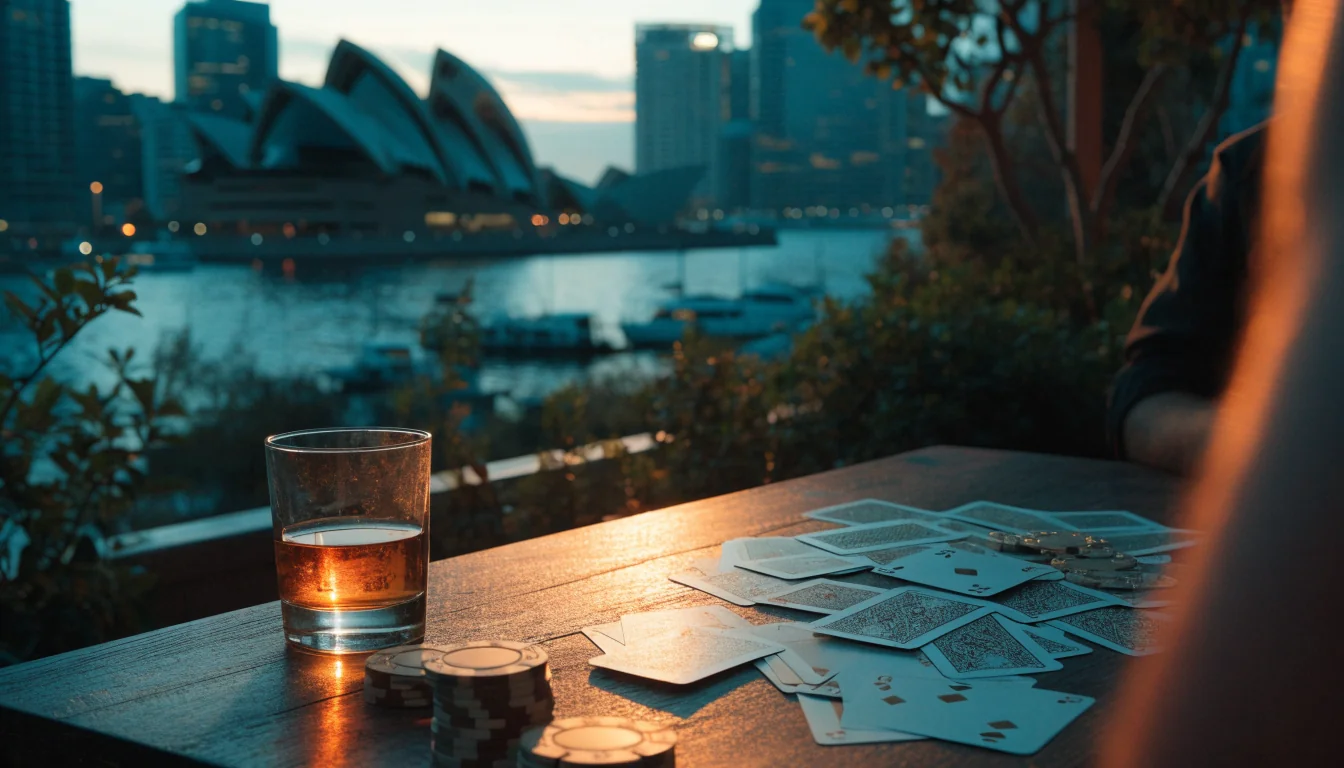
It would be a mistake to turn a licensing label into evidence about local venues. The narrow point is that the words “Curaçao casino” may describe an online service’s claimed regulatory status rather than a place to visit.
For Australians, the distinction does not change the domestic rule for online casino services. Under the Interactive Gambling Act 2001, operators cannot provide real-money online casino games to people in Australia. That covers casino-style services offered over the internet; the location of a venue on Curaçao, if any, is a separate question.
ACMA can block websites that provide prohibited interactive gambling services to Australian customers. Its records show that access to 1,369 illegal gambling and affiliate websites has been restricted since its first blocking request in November 2019; about 1,011 of those sites have been blocked. A place-based meaning of “casino” therefore should not be confused with whether an online service is available to Australians.
The practical distinction is simple: a physical casino is a venue, while an online casino’s Curaçao label is a claim about the operator’s offshore status. Neither wording alone establishes that online casino gambling is authorised in Australia.
What are the legal consequences for Australian players using offshore casinos?
The Interactive Gambling Act 2001 does not explicitly make an individual player’s use of an offshore casino a criminal offence. However, operators are prohibited from offering online casino games to people in Australia, and a Curaçao licence does not authorise the service locally.
What responsible gambling tools and support services are available?
Licensed operators provide deposit limits that players can set daily, weekly or monthly, and reputable platforms provide information about gambling-related harm and direct players to professional support services in Australia.
How long should a withdrawal take from a secure casino?
PayID transfers and some e-wallet withdrawals can clear within minutes once released, while bank transfers and card withdrawals can take several business days. Identity checks are commonly required before a withdrawal is processed.
Created by the ”Redspin Casino” editorial team.