
Check the details before choosing where to play
A practical guide to confirming venue access, understanding return claims, and checking the limits of venue and online information.

Table of Contents
Table of Contents
- Checking Whether a Venue Is Open
- Pokie Returns, Randomness and What a Payout Claim Means
- Getting to Adelaide Venues from the Airport or CBD
- What Venue Reporting Can—and Cannot—Tell You
- Online Deposits: Payment Conditions and Legal Limits
- Browser and Mobile Play: What Can Be Verified
- Venue Hours and the Limits of ‘24-Hour’ Searches
- What Can Be Confirmed About Crown Adelaide Pokies
- CBD Clubs and Responsible-Gambling Tools
- Cashless Payments and Searches Beyond Adelaide
Checking Whether a Venue Is Open
A venue’s “open” status is a narrow piece of information. It may indicate that the premises are operating, but it does not by itself establish that pokies are available at that moment, that every part of the venue is accessible, or that a particular service is running. Those distinctions matter when the purpose of checking is to avoid a wasted trip rather than simply confirm that a business has not closed permanently.
Online listings can be useful as a first check, but their status labels are not the same as confirmation from the venue. A map entry or directory may be updated separately from the venue’s own channels. A listing that says “open” should therefore be treated as a signal to verify, not as proof that the relevant facilities are available. The same applies to a listing that shows a venue as closed: it may not reflect a recent change.
The most dependable approach is to look for information published or confirmed by the venue itself. An official website, current social media notice or direct phone confirmation can clarify whether the premises are operating and whether the gaming area is accessible. If the venue cannot confirm the detail, the status remains uncertain. Repeating the same unconfirmed label across several directories does not make it more reliable; those listings may draw on the same underlying information.
Top operators
Choosing pokies to play in Adelaide in 2026 starts with checking the details that matter to you, such as licensing, minimum deposits and payout methods. Use these operator notes as a reference when deciding where to look next.
-
Uptown Pokies
- License
- Curacao (operating since 2017)
- Min. deposit
- A$20
Uptown Pokies has operated since 2017 and lists a Curacao license. Its minimum deposit is A$20.
-
WinSpirit Casino
- License
- Curacao eGaming OGL/2024/923/0383 (Antillephone N.V.)
- Min. deposit
- A$30
WinSpirit Casino lists a Curacao eGaming license, OGL/2024/923/0383, issued through Antillephone N.V. The minimum deposit is A$30.
-
Golden Pokies
- License
- Curacao
Golden Pokies lists a Curacao license.
-
SkyCrown
- License
- Tobique Gaming Commission
- Payout speed
- crypto ~10-15 minutes, fiat 1-5 days
- Min. deposit
- A$30
SkyCrown lists a Tobique Gaming Commission license. Its stated payout times are around 10–15 minutes for crypto and 1–5 days for fiat, with a A$30 minimum deposit.
-
LuckyVibe
- License
- Curacao Gaming Control Board OGL/2023/176/0095 (Hollycorn N.V.)
LuckyVibe lists a Curacao Gaming Control Board license, OGL/2023/176/0095, under Hollycorn N.V.
-
MrPacho
- Payout speed
- crypto 30-120 minutes, fiat 24-72 hours
- Min. deposit
- A$30
MrPacho lists crypto payout times of 30–120 minutes and fiat payout times of 24–72 hours. Its minimum deposit is A$30.
-
7Bit Casino
- License
- Curacao, operated by Dama N.V.
7Bit Casino lists a Curacao license and is operated by Dama N.V.
-
Thor Casino
- License
- Curacao – Antillephone N.V. (Versus Odds B.V.)
- Min. deposit
- EUR 20
Thor Casino lists a Curacao license through Antillephone N.V. (Versus Odds B.V.). Its minimum deposit is EUR 20.
-
GoldenCrown
- License
- Curacao Gaming Control Board OGL/2023/176/0095 (Hollycorn N.V.)
GoldenCrown lists a Curacao Gaming Control Board license, OGL/2023/176/0095, under Hollycorn N.V.
-
Ricky Casino
- Payout speed
- crypto under 1 hour, PayID 1-3 business days
- Min. deposit
- A$20 (A$30 to qualify for the bonus)
Ricky Casino lists crypto payouts in under an hour and PayID payouts in 1–3 business days. The minimum deposit is A$20, or A$30 to qualify for the bonus.
The question “Are the pokies open now?” can also mean different things. It may refer to the venue’s doors, the gaming area, or the machines themselves. A venue can be open for dining or another service while its gaming area is unavailable. Conversely, a venue may describe its operating status without specifying which facilities are accessible. A useful confirmation should match the actual purpose of the visit, rather than relying on a general open-or-closed marker.
Searches for early access, late access or a particular point in the day should be handled with the same distinction. A general venue listing cannot establish a specific operating time unless it gives a current schedule that applies to the relevant area. Even a posted schedule may not answer whether an unplanned closure or temporary restriction is in effect. The practical question is not merely whether a venue has a published schedule, but whether the detail applies to the day and service being checked.
A brief call can resolve ambiguity more efficiently than comparing multiple third-party listings. The question can be kept precise: whether the venue is operating now, and whether the gaming area is available. If the response covers only the venue as a whole, it should not be read as confirmation of the machines. Where a venue uses recorded information, a current notice or staff response may provide a clearer answer than an old directory entry.


There is also a difference between a venue’s operating status and its compliance arrangements. A reported change to responsible-gambling requirements does not show that a particular Adelaide venue is open. RegionRiverina.com.au reported a one-month grace period for venues to remove signage and introduce responsible gambling officers. That report concerns a transition in venue obligations; it is not a live status update for any individual premises. Signage, notices or references to a responsible gambling officer should not be treated as evidence that the gaming area is operating at the time of checking.
The same caution applies to claims attached to a venue’s online presence. A promotional post, an old photograph or a general description can establish neither current access nor the status of the machines. Content can remain visible after circumstances change. A timestamp helps assess how current a notice is, but it does not convert a general statement into confirmation of present availability.
For searches framed around Adelaide pokies being open now, the useful result is a current, venue-specific confirmation that addresses the gaming area—not merely a broad business listing. If that confirmation is unavailable, the status should be treated as unconfirmed rather than inferred from nearby listings, old posts or general venue information. This is a modest standard, but it prevents “open” from carrying more meaning than the information actually supports.
Do
- Verify status via the venue's official website or social media
- Call the venue directly to confirm gaming area access
- Check for a current schedule that applies to the specific service
Don't
- Rely on third-party directory status labels as proof
- Assume a general "open" status includes the pokie area
- Use old promotional posts to confirm present availability
Pokie Returns, Randomness and What a Payout Claim Means
A payout claim can describe a game setting without predicting what a player will receive. Return to player, or RTP, is a theoretical measure of how much a pokie is designed to return across play over time. It is not a promise that an individual session will return that share, nor a forecast of the next result. For a short run of spins, actual outcomes can sit well above or below the theoretical figure.
A specialist review reports that some game providers let casinos choose between more than one RTP setting for a particular pokie. If that applies, the same named game may operate with a different stated return at different casinos. A title match alone is therefore not enough to establish that two versions have identical settings. The RTP attached to one venue cannot automatically be carried across to another.
The practical comparison starts with the exact game and the setting that applies where it is offered. A displayed percentage is useful only when its scope is clear: it needs to refer to that version of the game, rather than a different configuration or a general figure associated with the title. Without that distinction, a comparison of Adelaide pokies can look precise while comparing unlike terms.
Even when the setting is clear, RTP has limited use for choosing a session. It describes a mathematical expectation across extensive play, not a minimum return, a likely cash-out or an amount due after a particular number of spins. A high stated return does not remove the possibility of losing a stake, and a lower result in one session does not establish that the game is withholding a payout. The percentage is a property of the game configuration, not a personal outcome schedule.

Why past spins do not forecast the next one
A pokie uses a Random Number Generator to determine each spin. Each result is separate from the previous one. A sequence of losses does not make a win more likely on the next spin; a recent win does not make another one less likely. The machine does not owe a balancing result because earlier outcomes have been uneven.
This matters when players describe a machine as “due” or assume that a run of wins signals continued good fortune. Those descriptions give a pattern to results that, under the stated mechanism, do not predict the next spin. A past sequence can be recorded, but it cannot be used as evidence that the next outcome is ready to change.
Randomness also means that two players using the same game setting can have sharply different sessions. One may finish ahead while another loses, without either result proving that the stated RTP has changed. A short sample is too narrow to be a reliable test of a long-run theoretical measure. Individual results are visible; the expectation takes much more play to describe.
What “best paying” can and cannot establish
A claim that a pokie is “best paying” needs a defined basis. It could refer to a stated RTP, a particular game setting or an observed run of results; those are not interchangeable. A ranking based on a percentage would still need to identify the relevant version and casino. A story about a recent jackpot would show that a large win occurred, not that the game offers a better expected return.
For Adelaide casino pokies, the useful question is not simply which title has the strongest reputation. It is whether the stated return can be tied to the exact version being played, and whether the comparison is based on matching settings. If that information is not clear, a confident ranking cannot be reconstructed from the title alone.
The same distinction applies when a venue or a page makes a payout claim. A stated RTP is a theoretical comparison point; it is not a cash-out promise, a session target or proof that a particular player will recover a particular amount. A previous spin supplies no adjustment to the next result. The numbers can describe a setting, but they cannot turn randomness into a schedule.
Getting to Adelaide Venues from the Airport or CBD
A venue described as being near Adelaide Airport, the CBD or North Adelaide is a location claim, not a comparison of its pokies. The label alone does not establish how far away it is, how long a trip takes or whether the venue is inside the airport or a particular neighbourhood. Those details depend on the actual street address and the starting point.
Airport searches can also blur two different questions: whether a venue is located at the airport, and whether one can be reached from the airport. A result that appears for an airport-related search does not prove the first. Before planning a trip, the useful detail is the venue’s own current address, checked against a map. A route planner can then show the journey from the relevant terminal or other starting point. Without a confirmed address, a claim that a venue is “near” the airport has no measurable value.

The same applies to the CBD. “Near the CBD” can refer to a short walk, a longer journey or somewhere merely within the wider metropolitan area. A map pin is more useful than a broad area label, but it should still be matched to the venue’s official listing. Search results can combine nearby businesses, outdated listings and places with similar names; a map entry alone is not proof that a particular venue operates pokies.
North Adelaide is another distinct geographic reference, not a guarantee that a venue is within walking distance of the CBD. The practical comparison is between confirmed addresses and the actual journey from the intended starting point. Walking, driving and public transport can produce different routes and travel times. Traffic, service changes and the time of travel can also affect a trip, so a generic distance or label should not be treated as a travel estimate.
For a venue visit, the location check and the venue comparison should remain separate. The address answers where the venue is. It does not establish which pokies are available, their settings or whether a venue is preferable. Likewise, a listing that mentions pokies does not establish that the venue is at the airport or close to a particular CBD address.
“Adelaide, Victoria” is not the same location as Adelaide in South Australia. A search using Victoria may reflect confusion about the state rather than a nearby Adelaide venue. Confirming the city and state before relying on a listing prevents a basic geography error from becoming a wasted trip.
Online results can also mix physical venues with online gambling services. Those are not substitutes in legal terms: under the Interactive Gambling Act 2001, companies cannot provide real-money online pokies to people in Australia without a domestic licence, and none has been issued. A location result does not change that position. For in-person gambling, the legal age in Australia is 18.
What Venue Reporting Can—and Cannot—Tell You
For Adelaide pokies venues, oversight information is more useful for understanding what an operator is expected to record than for deciding which venue is “best”. A reporting obligation can show that certain conduct must be documented. It does not establish that one venue has better machines, higher payouts or a safer overall environment than another.
A report by regionriverina.com.au describes a requirement for venues to keep a gambling incident register. The register is intended to capture details of occurrences, including situations in which a patron’s behaviour indicates they may be at risk of gambling harm or already affected by it. That is a record-keeping measure: it connects observable incidents with an operational response, rather than turning venue performance into a ranking.

The distinction matters when comparing pokies venues in Adelaide or the CBD. A register requirement does not identify which venues have recorded incidents, how many entries any venue has made, or how those records are assessed. Nor does it show that a venue with no publicly visible incident information has had no concerning events. Absence of a published figure is not a clean bill of health; it may simply mean the record is not presented as a public comparison.
The register also cannot establish that every incident is recognised in the same way. Its usefulness depends on staff noticing behaviour, recording relevant details and following the applicable process. A written record can support oversight, but it is not itself proof that harm was prevented or that a patron received effective assistance. Those are separate questions from whether an operator has a record-keeping obligation.
This limits what can responsibly be inferred from venue reporting. It may describe the kind of event an operator is expected to document, but it does not provide a basis for naming the best pokies venue in Adelaide. There is no defensible ranking in the register requirement alone: no comparative measure of machine quality, return, service or incident handling follows from the existence of the record.
For a venue comparison, reporting and preference should therefore remain separate. The existence of an incident register is relevant to how an operation is expected to handle and document signs of gambling harm. It is not a score, a guarantee of safety, or evidence that one Adelaide venue is superior to another. The practical value is narrower—and more concrete: incidents are meant to leave a record rather than disappear into an informal account of what happened.
Online Deposits: Payment Conditions and Legal Limits
A search for real-money pokies in Adelaide can lead to payment pages that look much like ordinary online checkout screens. That resemblance does not establish that the service is lawful. Under the Interactive Gambling Act 2001, companies cannot provide real-money online pokies to people in Australia without a domestic licence, and no Australian online casino licences have been issued. A deposit method cannot supply the missing authorisation.
The law is directed at operators rather than players. However, using an offshore casino carries a separate financial risk: if it withholds winnings, there is no Australian legal recourse to recover them. A payment confirmation records a transfer; it does not create a domestic remedy if a dispute follows. Offshore sites may also be subject to access blocking, so the ability to reach a payment page is not proof of regulatory standing.
PayID is a payment alias layer within the New Payments Platform. It can direct a transfer using an email address, mobile number or Australian Business Number. For a real-money payment, the PayID must first be linked to a bank account. This describes how the transfer is routed, not whether a gambling operator is licensed, whether its games are fair or whether its payout terms are reliable.
Payment rules also limit what can be used for online gambling. Credit card payments must not be accepted for these services. Where a payment option is presented, the method alone does not establish that the operator can lawfully offer online pokies to Australian residents. The same applies to promotions framed as a no-deposit offer: the absence of an initial deposit does not change the legal status of the underlying service.

Before any withdrawal from an offshore operator, identity and address documents must be verified. That requirement does not provide protection against a refusal to pay; it is a condition of the operator’s account process, not an Australian guarantee of the outcome. BetStop applies to Australian-licensed operators and does not bind offshore sites. Since Australian online casinos have no domestic licences, registration with BetStop should not be treated as a control over offshore casino accounts.
For anyone comparing Adelaide pokies with online real-money offers, the relevant calculation is therefore not simply the deposit method or the advertised bonus. The operator’s legal position, access restrictions and absence of Australian recovery options determine the exposure attached to the funds. A familiar payment label cannot reduce that exposure.
Browser and Mobile Play: What Can Be Verified
A browser page or mobile interface describes how software is accessed; it does not establish that real-money play is lawful in Australia. The Interactive Gambling Act 2001 prohibits operators from providing online casino games, including pokies, to people in Australia. No Australian-licensed online casino exists, so a polished website or an app-like layout cannot be treated as evidence of local authorisation.
That distinction matters for searches about online pokies in or near Adelaide. A site may claim to accept Australian customers, and offshore operators may do so, but that does not make the service Australian-licensed or remove the legal restrictions on the operator. The law targets providers rather than individual players. That is not a safeguard for a player’s money: there is no Australian-licensed online casino through which a local licensing framework could support a complaint about unpaid winnings.
Access is also not guaranteed. The Australian Communications and Media Authority enforces the law and blocks illegal offshore gambling sites; internet service providers must comply with its blocklist. A page loading on a phone, or appearing in a browser, therefore says nothing conclusive about its legal status, continued availability or the protection available if a dispute arises.
The same limit applies to claims about the “best-paying” online pokies, high limits or maximum bets associated with Adelaide. Those phrases do not establish a local online venue, a particular game setting or a payout outcome. A mobile screen can display promotional claims, but presentation alone is not independent verification. No specific mobile-access feature or Adelaide-based online service can be established from the fact that a site is reachable.
This is separate from visiting a physical venue. A nearby address or a mobile-friendly page does not turn an online casino into an Adelaide venue, and the word “near” does not establish that an online service operates locally. Browser access is a technical condition, not a location-based licence.
Practical checks should focus on what a claim actually proves. A page’s design can show that it has been made to fit a browser or screen; it cannot establish Australian authorisation, guarantee access, or create Australian recourse for a player. Likewise, an operator’s acceptance of Australian customers is not evidence that it may lawfully offer real-money pokies to people in Australia.
The distinction is narrow but consequential: interface describes delivery, while the law governs who may provide the service. Mobile access does not change that boundary.
Venue Hours and the Limits of ‘24-Hour’ Searches
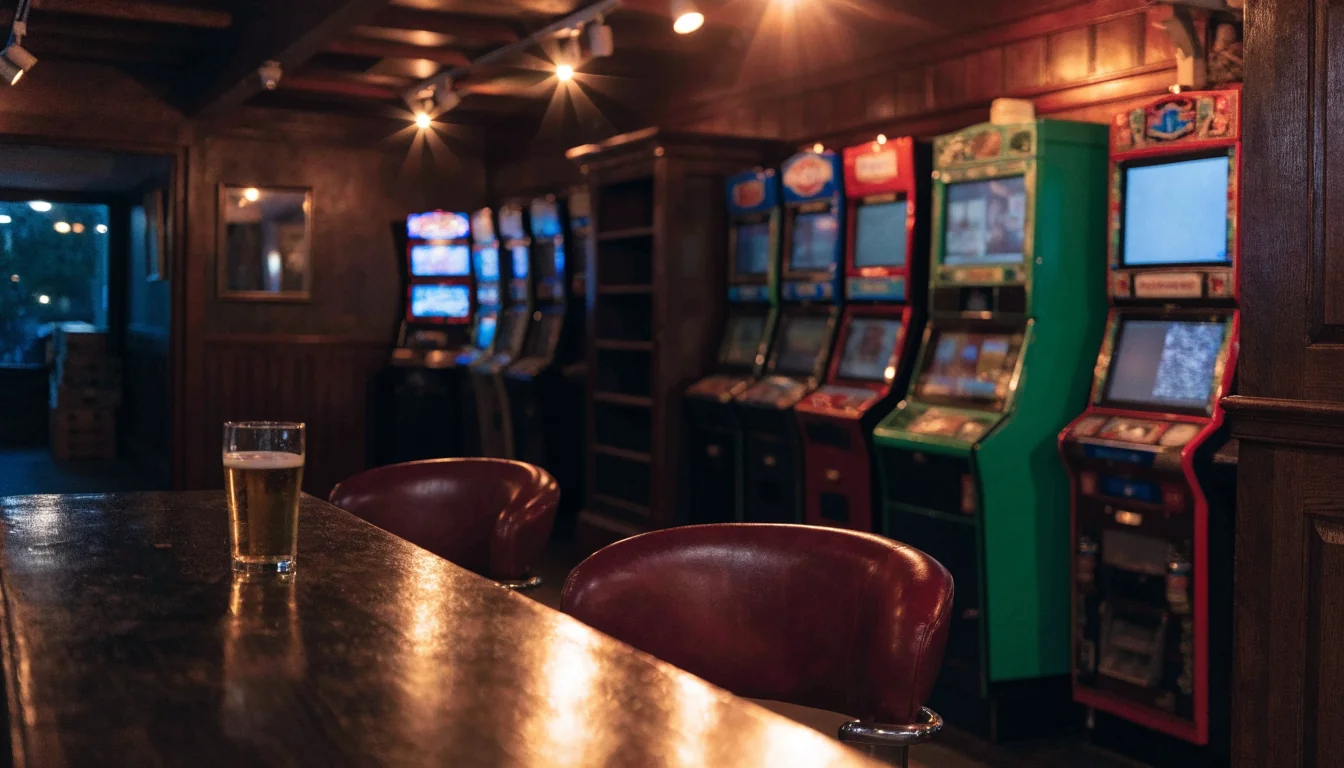
A venue described as open around the clock and pokies operating around the clock are not necessarily the same thing. The first claim concerns the venue’s opening hours; the second concerns when its gaming machines are available. A search for Adelaide venues open all day can blur those two questions, but the wording alone does not establish either schedule.
The distinction matters because the staffing rule is tied to machine operation, not simply to a venue’s doors being open. A venue could remain accessible for other services while pokies are not operating. Conversely, a statement about machine hours needs to be read as a claim about the machines themselves, rather than inferred from a general description of the venue. Without a confirmed schedule, “24-hour” is a label to verify, not a dependable measure of play time.
A report by regionriverina.com.au says that, from 1 July, venues operating more than 20 gaming machines are required to have a dedicated Responsible gambling officer (RGO) on duty for the period those machines are running. The condition links the officer’s required presence to operating time. It does not establish that a particular Adelaide venue runs machines continuously, nor does it provide that venue’s opening or closing hours.
That makes the operating window the useful detail in any hours statement. A claim that a venue is open at all hours does not, on its own, answer whether pokies are running throughout that period. Likewise, the staffing requirement does not supply a timetable: it describes an obligation during machine operation, not a promise of continuous availability.
Staffing requirements for gaming machines
A venue operating more than 20 gaming machines must have a dedicated Responsible Gambling Officer (RGO) on duty during the periods those machines are running.
For Adelaide hours comparisons, venue-wide schedules and machine schedules should therefore be treated as separate entries. A clear statement would identify which one it describes and specify the period covered. If the wording only says that a venue is open, it cannot be converted into a claim about pokies. If it refers to machine operation, that is the relevant period for the RGO condition at venues above the stated machine threshold.
The practical limit is straightforward: “open all day” is not a verified schedule for pokies. Nor does the RGO rule prove that machines are running at any particular time. It sets a staffing condition for qualifying venues while machines operate; the actual operating hours remain a separate piece of venue information.
What Can Be Confirmed About Crown Adelaide Pokies
A Crown-branded Adelaide pokies room, a particular machine list and a “best” ranking are separate claims. The name alone does not establish that a venue or machine selection is available in Adelaide, and it cannot identify which pokie offers the highest return or largest cash payout. Those details require specific, current evidence; an attractive label is not a payout term.
There is a limited point worth keeping in view when comparing claims about a named game. A specialist review reports that some providers allow casinos to choose among different RTP settings for the same pokie. If that applies, the game title by itself does not establish the return setting at a particular casino. That general possibility does not confirm that Crown uses a particular setting, or that a Crown-associated version is better or worse than one elsewhere.

The distinction matters for searches about Crown Adelaide pokies. A result that names a game, shows a promotional image or describes a jackpot does not, by itself, verify the venue, the machine’s availability or the conditions attached to a payout. Nor does a jackpot figure answer the question of the maximum cash amount payable: that would depend on the relevant machine’s stated terms, not on the casino name or the game’s headline prize.
“Best pokies room” is also not a measurable finding without a defined basis for comparison. A room could be judged by its location, facilities, machine range or published game terms, but those are different measures. No one measure can be inferred from a Crown reference alone. Likewise, a payout ranking requires comparable, identified settings and terms; a list of game names would not supply them.
For a practical comparison, the evidence needs to tie together the actual venue, the specific pokie and its applicable return or payout conditions. Without that link, claims about Crown Adelaide’s machines or a maximum cash payout remain unconfirmed, rather than established advantages. A general statement about configurable RTP settings is not a substitute for Crown-specific information.
CBD Clubs and Responsible-Gambling Tools
A club in Adelaide’s central business district may appear in the same search as a request for a “best” venue, but those are different decisions. A venue label does not establish which safeguards are available, how they are applied or whether they suit a person’s circumstances. No local club or machine ranking follows from the name of an area.
Deposit Limits
Constrains the amount of money added to a gambling account or facility.
Loss Limits
Focuses specifically on the amount of money lost during play.
Session Limits
Addresses the amount of time spent gambling.
Self-Exclusion
A stronger restriction intended to prevent access for a chosen or ongoing period.
Responsible-gambling tools are practical controls, not evidence that gambling becomes predictable or financially favourable. Common options include deposit limits, loss limits, session time limits and self-exclusion. Each addresses a different exposure: funds put into play, losses incurred, time spent gambling, or access to gambling altogether. The distinction matters because a limit on one measure does not automatically control the others.
A deposit limit constrains money added to an account or gambling facility; a loss limit focuses on losses; a session limit addresses time. Self-exclusion is a stronger restriction intended to prevent access for a chosen period or on an ongoing basis, depending on the arrangement available. The precise process and scope are venue-dependent, so a general description of a safeguard should not be mistaken for confirmation of how a particular Adelaide club administers it.
Limits work only when their terms are clear before play begins. A stated ceiling is not a budget recommendation, and setting one does not change the underlying financial risk. Self-exclusion also needs to be distinguished from ordinary limit-setting: it is designed to restrict participation rather than make continued play more manageable. Where gambling is causing financial strain or loss of control, reducing a limit may not address the problem that prompted it.
CBD searches can therefore be narrowed by checking the safeguard itself, not by relying on claims such as “best” or “club pokies.” Relevant details include which limit types the venue supports, how a request is recorded, and what self-exclusion covers. These are operational questions; a venue’s location or category cannot answer them.
The useful comparison is not a promise of better play. It is whether the available controls match the risk being managed, and whether their conditions are explicit. If access needs to stop, self-exclusion is the relevant tool to ask about; if the issue is spending or time, the corresponding limit is more directly targeted.

Cashless Payments and Searches Beyond Adelaide
“Cashless” can refer to different things: paying without notes and coins at a physical venue, or transferring money through a service such as PayID. The term alone does not establish which payment arrangements an Adelaide venue supports. Nor does a reference to cashless play confirm that a particular pokie or payment option is available.
PayID is an alias for a bank account on Australia’s New Payments Platform. A transfer can be addressed using an email address, mobile number or Australian Business Number rather than the account details themselves. The platform is supported by all major banks and protects transfers with end-to-end encryption. That describes the payment network, not the business receiving the money.
A specialist review has reported that some Australian banks, including major banks, sometimes stop PayID transfers to gambling merchants they identify. This is a reported restriction, not a dependable rule for every bank or transaction; payment outcomes can depend on the institution’s controls.

Most importantly, a payment method is not evidence that an operator is licensed, that a pokie is fair, or that its return settings are disclosed. PayID’s connection to the banking network says nothing about those separate matters. In Australia, the Interactive Gambling Act 2001 prohibits companies from providing real-money online casino games to people in the country, and no domestic online-casino licences have been issued. A transfer facility does not change that legal position.
Adelaide and Newcastle are separate location choices, not two descriptions of the same venue area. A Newcastle result does not establish that a venue is in Adelaide, while a payment label cannot confirm where a venue is located. Location and payment are different facts and need to be assessed separately. For an in-person venue, “cashless pokies” may describe a payment question, but it should not be read as confirmation of a specific machine, venue service or banking arrangement.
Created by the ”Redspin Casino” editorial team.