
Understand the trade-offs of mobile casino play
A practical guide to browser access, PWAs, payment conditions and the limits of casino comparisons.

Table of Contents
Table of Contents
- How Australian Players Access Offshore Casino Sites on Mobile
- Browser Play, PWAs and App-Store Availability
- Australia’s Rules for Offshore Mobile Casinos
- Deposits and Withdrawals: Methods, Timing and Conditions
- No-Deposit Offers: The Conditions Behind the Headline
- What a Mobile Casino Comparison Can—and Cannot—Establish
- Mobile Casino Play: Connection and Device Issues
- Free-Play Apps, Virtual Credits and Sideloading Risks
- Real-Money Play, Cashouts and Spending Controls
- Bonus Maths: Wagering, Deadlines and the Final Cashout
How Australian Players Access Offshore Casino Sites on Mobile
Mobile access to an offshore casino generally begins in the phone’s browser. The site opens as a webpage, and its menus and account functions are used within that browser rather than through a separate program. Casinos accepting Australian players typically provide browser access or a Progressive Web App (PWA), rather than a native mobile app. The distinction affects how the site is opened and saved on a device; it does not, by itself, establish anything about the operator or the terms of an account.
A PWA is a shortcut to a casino website designed to behave more like an app on a mobile device. It can be added from the casino website itself when an installation or add-to-home-screen prompt is available. Tapping that prompt and confirming the installation places an icon on the device’s home screen. The icon provides a direct route back to the website, so the site can be opened without first entering its address or finding a saved browser tab.
That shortcut does not turn the website into a separately developed native app. The PWA remains connected to the casino website, and its functions depend on what that site makes available. Its app-like presentation can make opening the site feel familiar, but the underlying access is still web-based. A home-screen icon is therefore a way to launch the site, not proof of a different account, a separate service or a guarantee that every page will work identically on every device.
The installation process is straightforward when the prompt appears: open the casino website in a mobile browser, select the option to install or add the site to the home screen, then confirm. The wording and position of the prompt can vary with the browser and device. If no prompt appears, the site may still be used in the browser; installation is an optional shortcut, not a prerequisite for viewing the website.

After installation, tapping the icon opens the site in its PWA presentation. Depending on the device and the site’s design, this may appear more app-like than an ordinary browser tab. It does not change the basic relationship between the device and the website: the PWA is an access point to the online service, rather than a separate casino account stored on the phone. Any account activity remains associated with the website.
This distinction also matters when returning to the site. Opening the PWA icon is not the same as opening a saved session that is guaranteed to remain active. The site may require the account holder to sign in again, and the available account features are determined by the site. A saved icon only makes the route back more direct; it does not preserve credentials or replace the website’s own account process.
For mobile use, browser access and a PWA are two ways of reaching the same kind of web service. Browser access leaves the site within the browser, while a PWA adds a home-screen shortcut and an app-like opening experience. Neither format should be treated as a separate version with inherently different terms. The relevant distinction is practical: one starts from the browser, the other from an installed icon.
The term “mobile casino” can describe either route. A casino viewed through a browser is still being used on a mobile device, and a PWA does not change that simply because its icon resembles an app. For an offshore crypto-friendly casino, the installation prompt should not be mistaken for an endorsement or a finding about suitability. Location acceptance must be confirmed with the site before any deposit. Using a VPN to reach a blocked casino may void winnings or result in account closure.
The practical limit of a PWA is that it relies on the casino website. If the site changes its design or access conditions, the home-screen shortcut continues to point to that web service; it does not create an independent route around those changes. Removing the icon removes the shortcut, not the account. Likewise, opening the site directly in a browser remains an alternative if the icon is inconvenient or unavailable.
Access mechanics do not settle the financial consequences of using an offshore service. If an offshore casino refuses to pay winnings, there is no Australian government body to complain to. That is a separate risk from whether the site opens in a browser or can be added to a home screen. The format describes how the website is reached; it should not be confused with a guarantee about the service behind it.
Browser Play, PWAs and App-Store Availability
For mobile access, the browser is the default format. Most Australian mobile casino sites are opened in a phone’s browser, and the account used there is the same one used on desktop. Mobile access is therefore generally a change of screen, not a separate account or a separate service.
That distinction matters when assessing what an “app” means. A casino website opened in a browser remains a website, even when its layout is designed for a phone. A Progressive Web App (PWA), by contrast, is a shortcut to that website which behaves more like a native app on the device. It does not turn the casino into a different operator or establish that the service has a listing in an app store.

A PWA and a browser bookmark can both provide a route back to a site, but they are not the same format. The browser route is direct: the site is opened in the browser. A PWA is installed from the casino website and appears as an app-like shortcut on the device. In either case, the underlying access is tied to the website rather than to a casino app downloaded from Google Play or the Apple App Store.
Native casino apps are rarely listed in either major app store in Australia. That makes browser access the practical baseline, rather than a fallback for people unable to find a particular app. A casino’s absence from an app-store search is not, by itself, evidence that its website cannot be opened in a mobile browser; equally, a website that works on a phone should not be described as an app-store product.
The distinction also prevents a common category error. Social and free-play casino apps use virtual credits and are a separate type of product from browser-based casino websites. Their app-store availability does not show that real-money casino apps are listed in those stores. The two formats should not be treated as interchangeable simply because both may use casino-style imagery or similar navigation.
For a comparison of mobile access, the useful question is therefore not just whether a site has an “app.” It is whether its mobile route is a browser page, a PWA shortcut, or a native app-store download. Those labels describe different ways of opening a service; they do not, on their own, establish anything about the service’s terms or suitability.
The browser-first pattern also means a mobile visit does not require a separate desktop-style registration simply because the screen is smaller. The account is shared between mobile browser and desktop access. Any difference in presentation is a matter of how the site is displayed, not proof of a distinct mobile account.
Claims about a “mobile app” should be read precisely. A site may use that phrase for a mobile-optimised website or a PWA, even where there is no native app listing in an Australian store. The label alone cannot tell which format is being offered. Identifying the access route is more informative than relying on the word “app,” which can cover several different things.
This comparison is limited to access format: browser, PWA, or app-store listing. It does not rank mobile casino sites or establish which one is best. It also does not make a social app equivalent to a website account. Those are separate distinctions, and treating them separately keeps the description of mobile access factual rather than promotional.
Australia’s Rules for Offshore Mobile Casinos
Top operators
Choosing a mobile casino in Australia calls for a clear look at the details available for each operator. This guide offers concise reference points to help you assess the options.
-
Uptown Pokies
- License
- Curacao (operating since 2017)
- Min. deposit
- A$20
Uptown Pokies has operated since 2017 under a Curacao license. Its minimum deposit is A$20.
-
WinSpirit Casino
- License
- Curacao eGaming OGL/2024/923/0383 (Antillephone N.V.)
- Min. deposit
- A$30
WinSpirit Casino is licensed by Antillephone N.V. under Curacao eGaming OGL/2024/923/0383. The minimum deposit is A$30.
-
Golden Pokies
- License
- Curacao
Golden Pokies is a Curacao-licensed casino. The available information identifies its licensing jurisdiction.
-
SkyCrown
- License
- Tobique Gaming Commission
- Payout speed
- crypto ~10-15 minutes, fiat 1-5 days
- Min. deposit
- A$30
SkyCrown is licensed by the Tobique Gaming Commission. Its stated payout times are around 10–15 minutes for crypto and 1–5 days for fiat.
-
LuckyVibe
- License
- Curacao Gaming Control Board OGL/2023/176/0095 (Hollycorn N.V.)
LuckyVibe is licensed by the Curacao Gaming Control Board under OGL/2023/176/0095, with Hollycorn N.V. named as the license holder.
-
MrPacho
- Payout speed
- crypto 30-120 minutes, fiat 24-72 hours
- Min. deposit
- A$30
MrPacho lists crypto payouts at 30–120 minutes and fiat payouts at 24–72 hours. Its minimum deposit is A$30.
-
7Bit Casino
- License
- Curacao, operated by Dama N.V.
7Bit Casino is licensed in Curacao and operated by Dama N.V. These details identify its licensing jurisdiction and operator.
-
Thor Casino
- License
- Curacao – Antillephone N.V. (Versus Odds B.V.)
- Min. deposit
- EUR 20
Thor Casino is licensed in Curacao by Antillephone N.V., with Versus Odds B.V. also named. Its minimum deposit is EUR 20.
-
GoldenCrown
- License
- Curacao Gaming Control Board OGL/2023/176/0095 (Hollycorn N.V.)
GoldenCrown is licensed by the Curacao Gaming Control Board under OGL/2023/176/0095, with Hollycorn N.V. named as the license holder.
-
Ricky Casino
- Payout speed
- crypto under 1 hour, PayID 1-3 business days
- Min. deposit
- A$20 (A$30 to qualify for the bonus)
Ricky Casino lists crypto payouts in under an hour and PayID payouts in 1–3 business days. The minimum deposit is A$20, or A$30 to qualify for the bonus.
Australian law draws a distinction between the conduct of an operator and that of an individual punter. Under the Interactive Gambling Act 2001, an operator must not provide online casino-style games to people in Australia. The prohibition covers services such as online casino games offered to users located in the country; an operator’s overseas base does not remove that restriction.
The Act does not make it illegal for an individual Australian to play at an offshore mobile casino. That distinction is narrow: it concerns the player’s liability under this law, not whether an operator is permitted to serve Australian customers, whether a site can be reached, or whether a player has practical protections if a dispute arises. It should not be read as government approval of offshore services.
The Australian Communications and Media Authority (ACMA) works to restrict access to illegal gambling services by blocking sites. As a result, an offshore site may be unavailable through an Australian connection even if its operator accepts Australian registrations. A block can also change the practical position without changing the legal distinction between operator and player.
A virtual private network does not resolve that uncertainty. Using one to reach a blocked casino can breach the operator’s terms; winnings may be voided and an account may be closed. The site’s location rules need to be confirmed before any deposit is made. This is a condition of access, not evidence that the service is authorised in Australia.
Offshore operators may refer to licences from jurisdictions such as Curaçao, Malta, or Gibraltar. These are foreign licensing locations, not Australian authorisations. Their presence does not override the Interactive Gambling Act or create a local route for resolving a payment dispute. A licence reference therefore answers a different question from whether the operator may lawfully offer casino games to customers in Australia.

There is no Australian government body that can be approached to compel an offshore casino to pay winnings if it refuses. That leaves a material enforcement gap: the player is not criminalised by the Act merely for playing, but the same law does not provide a local government complaints process against an offshore operator. A foreign licence should not be treated as a substitute for that missing local remedy.
Registration and participation are restricted to adults aged 18 or over. Age eligibility does not alter the operator-side prohibition, and satisfying an offshore site’s registration rules does not make its service locally authorised. The legal position is therefore not a simple choice between a “legal casino” and an “illegal player”: the operator’s offer, ACMA’s blocking activity, the site’s foreign licence and the individual’s conduct are separate matters.
That description is not an endorsement. Location acceptance must be established before depositing, while the possibility of blocked access, account closure and no Australian government complaint route remains part of the risk.
Deposits and Withdrawals: Methods, Timing and Conditions
Payment terms at offshore casino sites are operator-specific, so a deposit route should not be treated as proof that the same route is available for cashouts. Payment pages may list PayID, BPAY, e-wallets or cryptocurrency, but processing times and fees depend on the method and the site. A specialist review describes PayID deposits as near-instant and typically free; that is a reported feature, not a fixed market-wide term.
POLi is no longer a current route for Australian transactions. Its Australian operations closed in September 2023, so a payment page that still presents POLi as available needs to be checked against the operator’s current instructions.
E-wallets including MiFinity, Skrill and Neteller are used for deposits and withdrawals. A specialist review reports that e-wallet withdrawals can arrive within 24 hours after the casino’s pending period, while another describes crypto and e-wallet withdrawals as being processed in under 24 hours. These are not interchangeable clocks: processing by the casino, a pending period and the time taken by the payment provider can all affect when funds arrive.
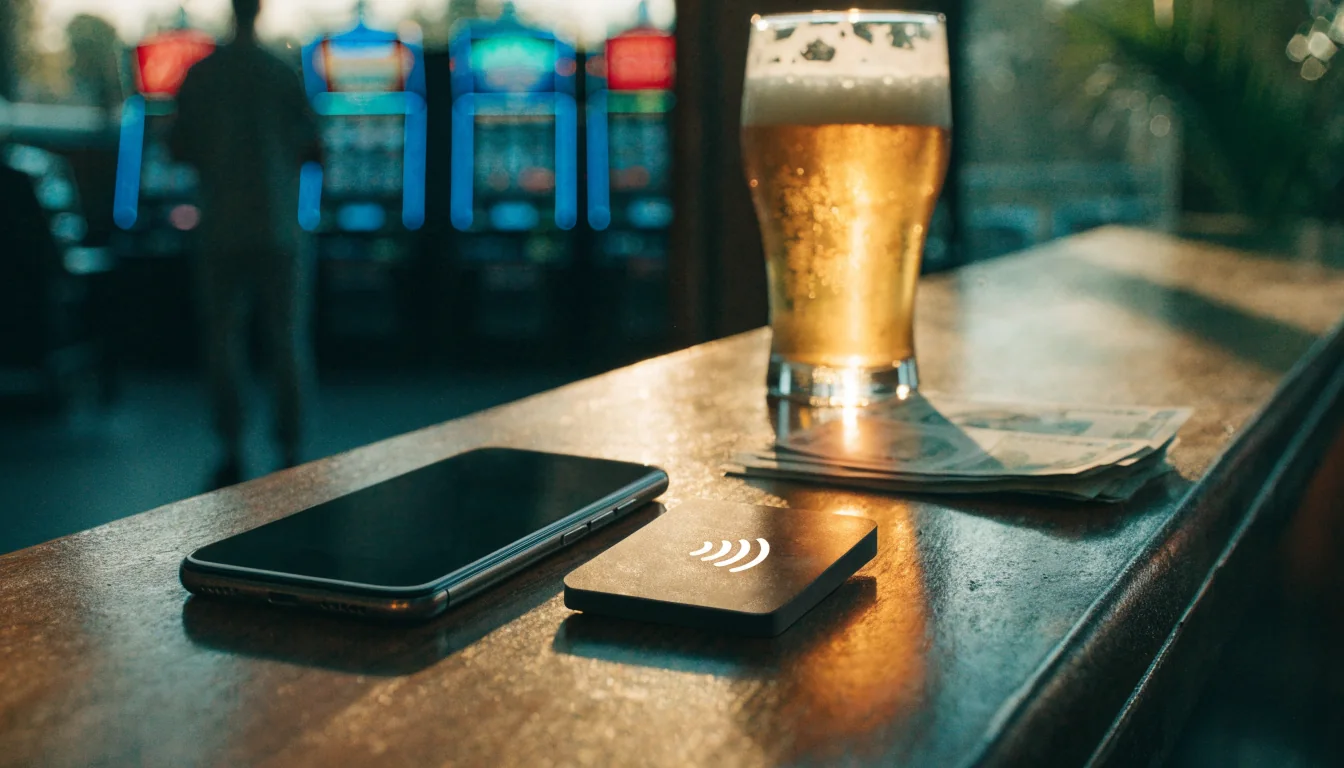
Bank transfers have a longer stated window. A specialist review reports that withdrawals by bank transfer can take up to five business days. That is a processing estimate, not a guaranteed arrival time. Weekends, bank handling and any operator review can affect the total elapsed time.
Checks, restrictions and delays
The first withdrawal commonly triggers identity verification. A casino may request identification such as a passport or licence, a selfie and proof of address. Until the documents are accepted, a withdrawal may remain on hold. Completing verification before requesting a cashout can reduce avoidable back-and-forth, but does not remove the operator’s processing period.
Some sites require a withdrawal to use the same method as the deposit; others classify certain methods as deposit-only. These conditions can determine which cashout route is available, so the payment and withdrawal rules need to be read together. A deposit option alone does not establish that withdrawals can be made through it.
A specialist review reports that some Australian banks block or flag gambling-related card charges, which can result in a declined deposit. Cards should not be treated as an endorsed payment route. A failed transaction may reflect a bank restriction rather than an error in the account details.
Withdrawal caps can also affect timing. A specialist review reports that some casinos set weekly or monthly limits, with reported weekly caps in the range of $4,000–$10,000. Where a requested balance exceeds a cap, payment may be split across periods rather than issued as one transfer. The exact cap and period are operator terms, not a general standard.
The practical comparison is therefore not just the speed shown beside a deposit button. It is the combination of accepted methods, fees, withdrawal eligibility, verification, pending time and cashout caps. PayPal availability cannot be assumed from the presence of other e-wallets; the listed methods and terms must identify it explicitly.
No-Deposit Offers: The Conditions Behind the Headline
“No deposit” describes the entry point, not the value of an offer. A mobile casino promotion may require no initial payment to activate, yet still attach conditions to using the bonus or converting it into withdrawable winnings. The headline alone cannot establish whether the offer is useful.
Factors Determining Bonus Value
- Wagering requirements
- Minimum deposit requirements
- Time allowed to meet conditions
These factors determine whether a no-deposit offer is practically useful.
The practical test is the full set of terms: wagering requirements, any minimum deposit and the time allowed to meet the conditions. A specialist review identifies these as the factors that determine an offer’s value; the terms attached to a particular promotion still need to be checked directly. If a minimum deposit applies, the offer is not cost-free in the ordinary sense. The relevant question is whether the required payment is acceptable given the restrictions that follow.
Wagering requirements matter because they set how much qualifying play must take place before a bonus can be cleared. The headline amount does not show that burden. Game restrictions can also affect which activity counts, so an offer that appears usable across a casino may be narrower in practice. A no-deposit mobile casino bonus code does not change those conditions; a code is a way to access an offer, not evidence that its terms are favourable.
Time limits add another constraint. Some bonuses must be cleared within a stated window, and missing the deadline can mean losing the bonus. That turns the offer into a task with a fixed period, not a standing balance. If the required play is incompatible with the time available, the headline value has little practical relevance.
A useful review therefore records the minimum deposit, wagering requirement, eligible games, expiry date and any cashout cap before accepting an offer. The final item matters because a cap may limit what can be withdrawn even after the other conditions are met. The amount displayed at registration is not necessarily the amount that can leave the account.
“Free” is a packaging word; the payable cost may be time, qualifying play, a deposit, or a restricted final cashout. The calculation is only possible once each condition is visible. If any term is unclear, the offer cannot be assessed reliably.

Any operators described as recommended elsewhere are offshore and crypto-friendly, and location acceptance must be confirmed before depositing. VPN access to a blocked casino may void winnings or result in account closure. If an offshore casino refuses to pay, there is no Australian government body to complain to. These risks sit outside the bonus arithmetic, but they affect whether the apparent value can be realised at all.
What a Mobile Casino Comparison Can—and Cannot—Establish
A comparison can organise verifiable information about mobile access and published account terms. It cannot prove that an offshore operator is safe, that a withdrawal will be paid, or that a site will remain available. A polished mobile layout is evidence of presentation, not evidence of reliability.
Any sites discussed in this comparison are offshore and crypto-friendly. That description is not an endorsement or an invitation to use them. Online casino-style games are prohibited services when offered to people in Australia, and access may be blocked. Australian players do not face liability under the Interactive Gambling Act 2001 merely for playing offshore, but that does not create local consumer protection. If an offshore casino refuses to pay winnings, there is no Australian government body to complain to.
A useful comparison separates observable terms from promotional language. Published rules can be checked for account conditions, payment restrictions, bonus requirements and withdrawal caps. Those details can be compared as written, but they do not establish how a dispute will be resolved or guarantee that the operator will apply its rules fairly. Rankings and labels such as “best” compress different criteria into a single verdict; without a disclosed, consistent basis, that verdict is not a measurable finding.

Location acceptance is a separate condition. A site’s presence in a comparison does not establish that it accepts people physically located in Australia. Acceptance must be confirmed with the operator before any deposit is made. A licence from a jurisdiction such as Curaçao, Malta or Gibraltar is not an Australian licence and does not remove the restrictions that apply in Australia.
A VPN does not settle the location question. Using one to reach a blocked casino may breach the site’s terms; the stated consequences can include voided winnings and account closure. A comparison cannot determine in advance how an operator will assess a particular account or transaction.
The practical boundary is therefore narrow: a comparison can report terms that are visible and distinguish them from claims that cannot be independently established. It cannot certify a mobile casino, turn an offshore licence into Australian approval, or guarantee access and payment. In a market where access may be blocked and local recourse is absent, the gap between a published promise and an enforceable remedy matters more than a ranking.
Mobile Casino Play: Connection and Device Issues
A specialist review identifies four recurring sources of trouble during mobile casino play: a weak connection, limited available memory, an outdated browser and too many apps running in the background. These problems can look similar on screen, but they call for different checks. A game that stalls does not, by itself, show which part of the setup has failed.

Connection quality is the first variable to isolate. An unstable signal can interrupt loading or leave a game slow to respond. If the page repeatedly freezes or loses its connection, compare its behaviour on another available connection before changing browser settings. A problem that disappears with a different connection points to signal quality rather than the device’s memory or software. Repeatedly reloading while the connection remains unstable is unlikely to resolve the underlying cause.
Available memory is a separate constraint. A phone with little free memory may struggle when a demanding page is open alongside other tasks. Closing unused apps and browser tabs can reduce what the device is handling at the same time. If performance improves after that, the issue may be device capacity rather than the casino page itself. This distinction matters: replacing a browser or changing settings will not necessarily help when the phone has too little memory available.
The browser also needs to be current. An outdated version can contribute to mobile casino game problems, including pages that fail to load or behave inconsistently. Checking for browser updates is a straightforward diagnostic step when the connection is stable and background activity has been reduced. Keeping the browser current is maintenance, not a guarantee that every game will run smoothly.
Background apps can consume both memory and processing capacity. Messaging, media and other open applications may continue working while a game is displayed. Closing apps that are not needed can make more resources available; if the problem persists, the browser or device may still be the limiting factor. Restarting the page after closing those apps can help establish whether the change made a difference.
Troubleshooting Mobile Play
-
1
Check Connection
Isolate signal quality by comparing behaviour on another available connection.
-
2
Reduce Background Activity
Close unused apps and browser tabs to free up device memory.
-
3
Update Browser
Ensure the browser is current to prevent pages from failing to load or behaving inconsistently.
-
4
Reassess Memory
If problems persist, check if the phone has sufficient available memory for the demanding page.
A useful troubleshooting order is to check the connection, reduce background activity, confirm that the browser is up to date, then reassess the device’s available memory. Changing one condition at a time makes the result easier to interpret. If the same casino games mobile page continues to fail after these checks, the cause may lie elsewhere, and repeating the same reload is not a diagnosis. New mobile casino games are subject to the same device constraints as older ones: novelty does not compensate for an unstable connection or insufficient resources.
Free-Play Apps, Virtual Credits and Sideloading Risks
Social and free-play casino apps sit in a different category from offshore real-money casinos. Their games use virtual credits, and the apps are available directly through the Google Play Store and Apple App Store. Their presence in those stores does not make them a way to gamble for cash: virtual credits are part of the free-play format, not a route to real-money play.

That distinction matters when comparing free mobile pokies with real-money services. A familiar casino-style game or interface does not establish that the same app accepts deposits or pays winnings. Nor does a free-play title establish anything about the terms, access conditions or protections attached to an offshore crypto-friendly casino. The formats may look similar on a phone; the funds involved are not equivalent.
An app offered outside the major stores may require sideloading—installing software from a source other than the store. That changes the security calculation. Sideloaded casino apps carry security risks, and their safety depends on the operator. The app’s appearance or branding cannot by itself verify how it handles device permissions, account information or software updates. For that reason, an installation prompt should not be treated as evidence that an app has been independently checked.
The same caution applies to claims framed as a mobile casino free signup bonus or a free mobile pokies bonus. A promotional label does not turn virtual credits into withdrawable money, and an app-store listing does not verify a real-money offer. These are separate questions: whether a title is free-play, whether an offshore service accepts Australian locations, and what conditions apply to any real-money offer. They should not be collapsed into one claim.
Any real-money casinos discussed in a comparison are offshore and crypto-friendly; acceptance of an Australian location must be confirmed before depositing. Using a VPN to reach a blocked casino may void winnings or result in account closure. If an offshore casino refuses to pay, there is no Australian government body to complain to. Those limitations are distinct from the availability of legal free-play apps in the major stores, and virtual-credit play should not be presented as a substitute or stepping stone to real-money gambling.
Real-Money Play, Cashouts and Spending Controls
A balance shown on a mobile casino platform is not the same as money available to withdraw. A first cashout may be held until identity checks are complete. These checks commonly involve a selfie or identity document and proof of address. Details that do not match the account can delay review, so the withdrawal process depends on both the casino’s checks and the documents supplied.
Do
- Complete KYC verification before requesting a cashout
- Confirm location acceptance before depositing
- Read full bonus terms including caps and expiry
Don't
- Assume a deposit method is available for withdrawals
- Rely on a VPN to guarantee access
- Mistake a balance for immediately withdrawable money
Timing claims need a defined starting point. A specialist review reports that crypto and e-wallet withdrawals may be processed in under 24 hours, but that refers to the casino’s processing—not necessarily the time until funds arrive. A pending period or verification review can add time. The figure is a reported claim, not a dependable promise of when a particular withdrawal will clear.
Spending controls affect the amount that can be risked before play begins. A specialist review describes controls such as deposit, loss and wager limits, session time limits, and self-exclusion. Their availability and operation depend on the individual platform. A limit is useful only if its settings and effect are clear; self-exclusion is a stronger restriction than a reminder or time prompt.
The sites discussed in comparisons are offshore and crypto-friendly. Their inclusion is not an endorsement or an offer to gamble. Australian punters must confirm that a site accepts their location before depositing. Using a VPN to reach a blocked casino may void winnings or result in account closure. There is no Australian government body to complain to if an offshore casino refuses to pay winnings.
Before any bonus is claimed, its terms should be read in full: wagering requirements, game restrictions, expiry dates and cashout caps can change the amount that can ultimately be withdrawn. Those conditions are separate from identity verification; completing KYC does not remove bonus restrictions.
A mobile real-money account therefore has two distinct checks: whether a balance is eligible for withdrawal under the platform’s rules, and whether the account has passed its identity review. Deposit, loss and session controls address a different issue: the amount of money and time exposed to play. None of these checks makes an offshore service locally protected.
Bonus Maths: Wagering, Deadlines and the Final Cashout
A bonus is not its headline value. Its financial effect depends on the wagering requirement, which games count towards it, when the deadline falls and how much can ultimately be withdrawn. Those terms determine whether the bonus can contribute to a cashout or expires first.

A specialist review describes welcome-bonus wagering requirements ranging from 30x to 50x the bonus amount. The multiplier applies to the stated base in the offer terms; it should not be assumed to apply to the deposit as well as the bonus. Requirements above 40x are considered steep in that review. The calculation is straightforward: multiply the specified bonus base by the stated wagering figure. The resulting turnover is the amount of eligible wagering required before the bonus can be cleared, not a promise of winnings or a cashout.
Deadlines change the practical cost. A specialist review reports that many bonuses must be cleared within 7–10 days. If the deadline passes first, the bonus is lost. A high wagering total compressed into a short window may therefore be less usable than a lower total with more time. The calculation should account for the eligible games and the actual expiry time, not just the multiplier.
A mobile casino bonus code does not remove these conditions. Nor does a no-deposit label establish that bonus funds can be withdrawn without meeting wagering rules. The offer’s full terms determine what counts, when the clock starts and what happens to any remaining bonus balance at expiry.
Before claiming, the relevant terms are the wagering requirement and its calculation base, game restrictions, expiry date and cashout cap. A cap can limit the amount paid even after wagering is complete, so clearing the requirement does not by itself establish the final withdrawal amount. The final figure depends on the applicable cap and the balance eligible for cashout.
The casinos compared on this page are offshore and crypto-friendly; location acceptance must be confirmed before any deposit. There is no Australian government body to complain to if an offshore casino refuses payment. A VPN may also void winnings or result in account closure. Bonus arithmetic cannot remove those risks.
Can I play mobile casinos for real money without an app?
Yes. Most are accessed through a mobile browser, using the same account as on desktop; a PWA home-screen shortcut is optional.
Can players use real-money mobile casinos in Australia?
Yes, individual Australian players are not prohibited from playing at offshore casinos under the Interactive Gambling Act 2001. The Act does prohibit operators from offering online casino-style games to users in Australia.
How do wagering requirements actually work in practice?
A requirement of 30x to 50x means wagering the bonus amount 30 to 50 times; requirements above 40x are considered steep. Many bonuses must be cleared within 7–10 days, or the bonus is lost.
What is a PWA casino?
A PWA casino is a casino website that can be added to a phone’s home screen as an app-like shortcut. It still connects to the website and is not a separate native app or account.
Should I accept a welcome bonus?
Check the wagering requirement, minimum deposit and time limit before accepting. Requirements commonly range from 30x to 50x, and missing the clearance deadline can mean losing the bonus.
Created by the ”Redspin Casino” editorial team.